
If you are looking for AI chatbot development in Scotland, we can build a chatbot system for your website that is designed around your business, your enquiries, and your customer journey. We do not treat chatbots as simple website add-ons. We build them as practical business tools that can help you answer questions faster, capture leads, qualify enquiries, automate repetitive conversations, and support customers across different channels.
We can create AI chatbots, AI agents, chatbot workflows, knowledge bases, vector-database-backed retrieval systems, custom support bots, lead qualification bots, appointment booking bots, CRM-connected bots, and third-party integrated chatbots for businesses across Scotland. These systems often work especially well as part of a wider lead generation automation strategy in Scotland. Whether you are targeting Glasgow, Edinburgh, Aberdeen, Dundee, Inverness, Stirling, Perth, Paisley, Livingston, or Falkirk, we can build a chatbot solution that fits your business model and website goals.
If you already have a website or are planning one, this service also works naturally with our web development services. If your focus is specifically local, we also support businesses through our web development services in Scotland, including location-focused implementation for Glasgow, Edinburgh, and Aberdeen.
We provide AI chatbot development as a complete service, which means we can plan, design, build, train, test, and deploy the chatbot system for your website based on how your business actually works. Instead of using a generic chatbot that gives the same standard answers to every visitor, we create a chatbot experience that is aligned with your services, user intent, and conversion goals. The purpose is not only to make your website look more modern. The purpose is to make the website more useful for visitors and more valuable for your business.
When someone visits your website, they may want immediate answers about your services, pricing, timeline, process, location, support, booking options, or the next step. If those questions are not answered quickly, many visitors leave the site without enquiring. This is where a properly built chatbot can help. We can create a chatbot that responds in real time, guides the user properly, captures useful lead information, and directs the conversation toward the right business outcome.
Chatbot Strategy Based on Your Business Type
Every business needs a different chatbot strategy. A clinic, real estate company, training provider, service business, or agency will not need the same type of chatbot. We first define what the chatbot should actually do for your business. In some cases, the priority is lead generation. In others, it is customer support, appointment requests, enquiry handling, service guidance, or after-hours response. This strategy stage is important because a chatbot should be built around real business requirements, not just installed as a generic website feature, especially when it needs to support appointment booking automation in Scotland.
Custom Conversation Flow Design
We design the chatbot conversation flow based on how users are likely to interact with your website. This includes planning greetings, question handling, lead capture, follow-up prompts, service recommendation paths, escalation rules, and handoff points. Instead of giving disconnected answers, the chatbot can be structured to guide visitors through a proper journey. For example, if someone lands on your website and asks about pricing, the chatbot can answer in context, ask qualifying questions, and direct them toward the right service or enquiry step. This helps create a more intelligent and useful interaction.
AI Chatbot Training Based on Your Services and FAQs
A chatbot becomes more useful when it is trained on your business content. We can train the chatbot using your services, frequently asked questions, support questions, service descriptions, location details, process explanations, and other business-specific information. This helps the chatbot respond in a way that is more relevant to your company. Without this training, many chatbots remain too generic and often fail to answer properly. Good chatbot training improves relevance, reduces confusion, and creates a better experience for users.
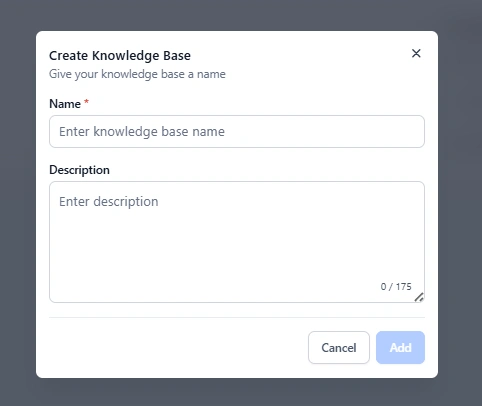
Knowledge Base Setup
To support accurate answers, we can create or structure a knowledge base for the chatbot. This may include website content, internal FAQs, policy information, service pages, support content, brochures, or product and service documentation. A well-structured knowledge base helps the chatbot retrieve better answers and stay aligned with your business. This is especially useful when you have many services, several locations, or a large amount of information that users may ask about.
Vector Database Integration for Better Retrieval
For more advanced chatbot projects, we can implement vector database integration. This allows the chatbot to retrieve information more intelligently from a larger knowledge source. Instead of depending only on basic keyword matching, a vector-based setup helps the chatbot understand the meaning behind user queries and find more relevant information. This becomes valuable when your website has a lot of content, when your support information is detailed, or when you want the chatbot to answer more naturally from structured business knowledge.
Chatbot UI Setup on Website
A chatbot is not just its backend logic. The front-end experience also matters. We can set up the chatbot interface on your website so that it fits naturally with your design, user flow, and brand presentation. This includes where the chatbot appears, how it opens, how the messages look, when prompts are triggered, and how the bot interacts with visitors on important pages. A well-placed chatbot can improve engagement without becoming intrusive. The interface should feel like a helpful part of the website, not an interruption.
CRM and Third-Party Integration
A chatbot becomes much more useful when it connects with the rest of your business tools. We can integrate the chatbot with CRM systems, forms, booking tools, email workflows, automation systems, WhatsApp, support tools, or other platforms you use. This means chatbot conversations do not stay isolated. A lead can be pushed into your CRM, a support request can be routed to your team, or an enquiry can trigger an automated response flow. This turns the chatbot into part of your business operations rather than just a front-end widget, which is why it often pairs well with WhatsApp automation in Scotland.
Lead Capture and Qualification Logic
One of the strongest benefits of chatbot development is lead capture. Instead of only showing a contact form, the chatbot can ask structured questions and collect useful information before the lead reaches your team. This may include the users service interest, location, urgency, budget range, business type, or preferred next step. This helps qualify leads more effectively and gives your team better context. It can also reduce time wasted on irrelevant enquiries and improve response prioritization, particularly when aligned with lead generation automation in Scotland.
Human Handoff Flow
Not every conversation should stay fully automated. In many cases, a chatbot should know when to pass the user to a real person. We can build human handoff logic so that complex, sensitive, or high-intent conversations are escalated appropriately. This may happen through a live chat tool, email notification, CRM task, support routing, or another workflow. A good handoff system ensures the chatbot supports your team rather than blocking real communication.
Testing and Refinement
A chatbot should be tested before and after launch. We review the chatbot's responses, conversation logic, fallback handling, integration behavior, and lead capture quality to identify weaknesses. Based on testing, we refine the prompts, responses, logic, and workflows so the chatbot performs better in real usage. This stage is important because most chatbot improvements come from observing how actual users interact with it and then optimizing the system accordingly.
Multi-Channel Chatbot Deployment Where Needed
Some businesses need the chatbot only on the website, while others need it across multiple channels such as website chat, WhatsApp, social messaging, or CRM workflows. Where needed, we can plan multi-channel deployment so the chatbot supports user communication beyond a single page or device. This is useful for businesses that want a more connected communication system and do not want leads or support queries to be limited to one channel.
The Real Goal of the Chatbot
The goal is not just to add a chat widget to your site. The real goal is to build a chatbot that improves the way your website works. A strong chatbot works best when it is planned as part of your website development strategy, not as an isolated widget added later. When planned properly, the chatbot becomes a working part of your website's conversion system, not just an extra feature.
1. AI Agents
We can build AI agents that do more than answer simple questions. These can be trained to guide users, qualify leads, collect business requirements, route support requests, and even trigger actions in your connected tools. AI agents are suitable when you want a chatbot that behaves more like a digital assistant than a static FAQ tool, especially inside broader Go High Level automation systems in Scotland.

2. AI Chatbot Training
A chatbot is only as useful as the training behind it. We can train your chatbot on:
- your services
- your offers
- your company profile
- location-specific business information
- frequently asked questions
- support questions
- lead qualification questions
- policies and process details
This makes the chatbot more relevant and less generic.
3. Knowledge Base Setup
We can create or structure a knowledge base for the chatbot so it can answer from real business information rather than random generic responses. Your knowledge base may include:
- website pages
- service descriptions
- internal documents
- support notes
- product details
- pricing guidance
- FAQ content
- onboarding documents
- course or service brochures
4. Vector Database Integration
For more advanced chatbot projects, we can connect the chatbot with a vector database so it can retrieve better answers from larger content sets. This is useful if your business has a lot of service content, support documentation, training material, or internal knowledge that the chatbot should use intelligently, particularly when the backend is being supported by a Laravel development agency in Edinburgh.
5. Third-Party Chatbot Integration
We can integrate the chatbot with external tools and platforms so that it becomes part of your workflow. For example:
- CRM integration
- form submission routing
- WhatsApp messaging flow
- email notification
- booking tools
- lead pipeline updates
- automation tools
- support handoff systems
6. Custom Chatbots
We can build custom chatbots for businesses that need specific conversation logic, a unique tone of communication, advanced workflows, or deeper business integration. This is useful when a generic off-the-shelf bot is not enough.
Many businesses assume chatbot development means creating one standard chat tool, but in reality there are several chatbot types, and each serves a different purpose. The right chatbot depends on what you want your website or business system to achieve. Some bots are designed to answer questions, some to capture leads, some to automate support, and some to guide users through a complete workflow. Based on your requirement, we can build different chatbot types for different business goals.
Website Enquiry Chatbots
These chatbots are designed for website visitors who want quick answers before taking the next step. They help users understand your services, ask questions, and send an enquiry directly from the website. This type of chatbot is useful when you want to reduce drop-off and encourage more visitors to contact you.
Lead Qualification Chatbots
Lead qualification chatbots are built to filter and organize enquiries before they reach your team. They can ask questions such as service need, budget, location, urgency, business type, or project timeline. This helps you receive more relevant leads and saves time by reducing unqualified enquiries.
Customer Support Chatbots
These chatbots focus on support-related communication. They answer repeated questions about services, orders, policies, account issues, or general help topics. Customer support chatbots are useful for reducing manual support workload and giving users faster responses at any time of day.
Appointment Booking Chatbots
These bots help guide users toward booking actions such as scheduling a consultation, requesting a callback, or expressing appointment intent. They are useful for clinics, consultants, agencies, and service businesses that want to make the booking journey easier and more immediate, especially when combined with appointment booking automation in Scotland.
WhatsApp Chatbots
WhatsApp chatbots are useful when your audience is more comfortable messaging than filling out forms or sending emails. They help businesses automate first responses, guide users through enquiries, and maintain communication in a channel many customers already use daily, which is why many businesses also invest in WhatsApp automation in Scotland.
AI Sales Chatbots
AI sales chatbots are focused on converting interest into action. They help explain services, answer pre-sales questions, address common doubts, and move prospects closer to an enquiry or consultation. These bots are useful when the website is expected to generate leads and support the sales process.
FAQ Chatbots
FAQ chatbots are built around common, repeated questions. They work well for businesses that receive the same types of enquiries regularly and want to answer them quickly in a structured way. They are simple, practical, and often useful as an entry-level chatbot solution.
Knowledge Base Chatbots
These chatbots answer questions using a structured source of business information such as service pages, help documents, internal FAQs, or support content. They are useful when your business has a lot of information and you want the chatbot to provide more informed and relevant responses.
CRM-Integrated Chatbots
CRM-integrated chatbots connect directly with your lead or customer management system. This means the information collected during a chatbot conversation can move into your CRM, pipeline, or workflow automatically. These bots are useful when chatbot conversations need to support sales tracking, follow-ups, or internal team processes.
ChatGPT-Style Conversational Bots
These bots are more flexible and conversational than traditional rule-based chatbots. They are useful when users may ask open-ended or unpredictable questions and when you want the conversation to feel more natural. This type of chatbot is often suitable for businesses that want a more modern AI-driven interaction.
GHL Chatbots
GHL chatbots are built for businesses using Go High Level. These chatbots can be connected with forms, tags, workflows, pipelines, automation, and follow-up systems inside the platform. They are especially useful for businesses that want chatbot activity to be closely tied to their CRM and marketing automation setup, which is why they align naturally with Go High Level automation in Scotland.

Multi-Step Workflow Chatbots
These chatbots are built for processes that require several stages before an action is completed. For example, the bot may collect user details, confirm the requirement, assign a category, and then route the enquiry or trigger an action. These bots are useful for businesses with more structured service, booking, or qualification workflows.
Industry-Specific Chatbots
Industry-specific chatbots are tailored for the needs of a particular business category. A clinic chatbot, for example, will behave differently from a real estate chatbot or an education chatbot. These bots are designed around industry-specific questions, user intent, and workflow requirements, making them more practical and relevant for the business they support.
Depending on your use case, we can build chatbot systems using or integrating a range of platforms and tools. Each platform supports different chatbot functions, so the right choice depends on whether you need website chat, CRM automation, WhatsApp messaging, AI conversation, workflow control, or custom business integrations.
-
tawk.to
tawk.to is useful for website live chat and visitor communication. It works well for businesses that want a simple chat interface on their website along with human support options. It can be a good fit when the requirement is to combine chatbot handling with manual live chat support. -
Go High Level
Go High Level is suitable when the chatbot needs to connect with CRM, lead pipelines, automation, forms, tags, and follow-up workflows. It is especially useful for lead generation businesses that want chatbot conversations to become part of a full sales and nurturing system. We can use it to build chatbot flows that support both engagement and conversion tracking. -
Twilio
Twilio is commonly used when chatbot communication needs to extend into SMS, WhatsApp, voice, or messaging APIs. It is useful for businesses that want more flexible communication infrastructure rather than only a website-based bot. We can use Twilio when the chatbot needs stronger messaging connectivity and custom communication workflows. -
Botpress
Botpress is a strong option for more advanced chatbot and AI agent development. It is suitable when the requirement involves custom logic, structured workflows, and more control over the chatbot experience. We can use Botpress for businesses that need a more flexible and tailored AI chatbot system. -
Dialogflow
Dialogflow is useful for conversational interfaces that need intent detection and structured chatbot logic. It can work well for support bots, FAQ bots, and process-driven conversation systems. We can use it where businesses need a scalable chatbot with strong conversational flow handling. -
OpenAI / ChatGPT
OpenAI-powered chatbot systems are useful when the goal is to create more natural, flexible, and intelligent conversations. These are ideal for businesses that want a chatbot to answer varied questions, explain services, and interact in a more human-like way. We can use OpenAI where conversational quality and AI-driven response handling are important. -
ManyChat
ManyChat is commonly used for automated messaging and conversation flows, especially where businesses want structured engagement and follow-up. It can be useful for lead generation, customer interaction, and marketing-based chatbot experiences. We can use it when the chatbot needs to support recurring communication and guided user journeys. -
Intercom
Intercom is useful for customer communication, support, onboarding, and business messaging. It works well for businesses that want chatbot support alongside customer success and live support systems. We can integrate it where chatbot interaction needs to be part of a broader customer communication setup. -
Zapier
Zapier is useful for connecting the chatbot with other business tools without building every integration from scratch. It can automate actions such as sending leads to CRM, updating sheets, triggering emails, or passing data to other apps. We can use Zapier when the chatbot needs to connect with multiple platforms quickly and efficiently. -
Make
Make is useful for creating more flexible and visual automation workflows between chatbot systems and third-party tools. It can support more advanced logic, branching, and process automation than simple one-step integrations. We can use Make when the chatbot must trigger deeper workflow automation across systems. -
HubSpot
HubSpot is useful when chatbot conversations need to connect directly with marketing, sales, and CRM functions. It can help manage leads, automate follow-ups, and track chatbot-generated contacts inside a structured pipeline. We can use HubSpot for businesses that want their chatbot integrated into a mature CRM and marketing environment. -
Custom APIs
Custom APIs are useful when your chatbot needs to connect with your own internal systems, business tools, booking engine, ERP, database, or any non-standard platform. This gives much more flexibility than relying only on prebuilt integrations. We can use custom APIs for businesses that need a more tailored chatbot solution built around their exact operational workflow.
These tools support different kinds of chatbot setups, and in many projects, the best solution is not just one platform but a combination of tools working together. For example, a chatbot may use OpenAI for response generation, Go High Level for CRM and workflow handling, Twilio for WhatsApp communication, and Zapier or Make for automation between systems.
Our AI chatbot development service can be useful for businesses such as:
- service businesses
- healthcare and clinics
- training academies
- local businesses
- real estate businesses
- digital agencies
- consultants
- eCommerce brands
- coaches
- educational institutions
- home service companies
- legal and finance enquiry-led businesses
If your website gets repeated questions, loses leads after business hours, or depends too much on manual replies, chatbot implementation can be valuable.
This can be especially useful for businesses in Edinburgh that rely on consultation requests, appointment booking, or service-based enquiries through their websites.
We approach chatbot development in a structured way.
Discovery and Requirement Mapping
We first understand what you want the chatbot to do. Some clients need lead capture, some need support automation, and some need a more advanced AI agent that works across multiple channels. In many projects, this early planning overlaps with lead generation automation strategy in Scotland so the chatbot supports a broader commercial workflow.
Data and Knowledge Collection
We gather the content that the chatbot needs to learn from. This may include your service pages, support notes, business information, FAQs, pricing logic, or other internal material.
Flow Design
We define how the chatbot should behave. This includes:
- greeting logic
- qualification logic
- service recommendation paths
- handoff to team
- fallback responses
- lead capture fields
- escalation flow
Training and Knowledge Base Setup
We train the chatbot on your content so that responses are aligned with your brand and services.
Integration
If needed, we connect the bot with CRM, forms, messaging channels, or external systems.
Testing
We test for response quality, logic gaps, user flow problems, and handoff quality.
Launch and Refinement
Once launched, the chatbot can be improved further based on real user interactions.
The timeline depends on the project requirement, but in many cases we plan the project for up to 2 months depending on the requirement.
A general view is:
- basic chatbot setup: around 1 to 2 weeks
- custom chatbot with training and integrations: around 3 to 5 weeks
- advanced AI agent with knowledge base, vector database, and multi-system integration: up to 2 months depending on the requirement
The timeline changes based on:
- number of pages or documents to train on
- number of chatbot flows required
- whether CRM integration is needed
- whether WhatsApp or external messaging channels are needed
- whether the bot is simple or agentic
- complexity of handoff and automation rules
- number of revisions and testing cycles
Our AI chatbot development service in Scotland starts from £300, and the final cost depends on project scope.
A lower-entry project may include:
- basic website chatbot setup
- FAQ handling
- simple lead capture
- limited training
- basic deployment
A mid-range or advanced project may include features that often connect well with WhatsApp automation in Scotland, such as:
- custom conversation design
- multiple service flows
- knowledge base creation
- vector database support
- CRM integration
- WhatsApp or Twilio integration
- advanced AI logic
- lead scoring or workflow automation
- multi-location or multi-service handling
So while the starting cost is £300, the final cost depends on the requirement, depth of training, number of integrations, and complexity of the chatbot.
If needed, we can also create a demo chatbot project before full deployment. This is useful when you want to first evaluate how the chatbot will work on your website.
A demo can include:
- one chatbot flow
- a sample knowledge base
- basic lead capture
- service-specific responses
- one simple integration
- limited testing environment
This helps you understand the chatbot's response quality, user experience, and practical value before scaling it further.
Businesses in Glasgow, Edinburgh, Aberdeen, Dundee, Inverness, Stirling, and Perth increasingly need faster, smarter, and more scalable communication systems. Many users now expect an immediate first response. If they do not get one, they often leave the website and enquire elsewhere.
For businesses looking to improve enquiries, automate first responses, and strengthen their online presence, chatbot implementation can work alongside our web development services in Scotland to create a more conversion-focused website experience.
A well-built chatbot helps by:
- responding immediately
- reducing enquiry drop-off
- capturing leads 24/7
- filtering low-quality enquiries
- improving team efficiency
- supporting website conversion
- reducing repetitive manual work
- giving a better first interaction to potential clients
For this reason, chatbot development should not be seen only as a technical feature. It should be seen as part of the overall website growth strategy, alongside strong Scotland web development support and city-based implementation where required.
Here are some live AI chatbot projects we have built and deployed for our international clients:
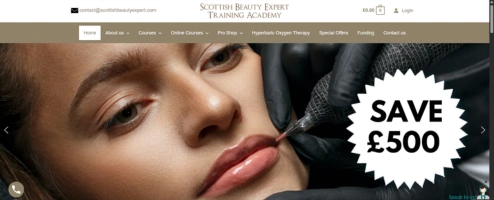
An AI chatbot built for a UK-based beauty training academy in Glasgow & Aberdeen. The chatbot handles course enquiries, qualifies leads, and captures booking requests. Integrated with tawk.to for live chat support and Go High Level for lead pipeline and follow-up automation.
View Live Site →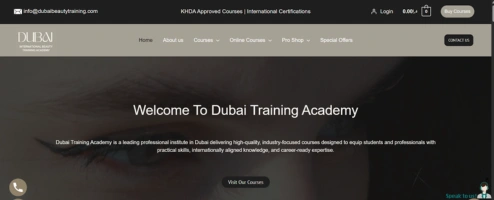
An AI chatbot developed for a Dubai-based beauty training institute to handle pre-sales questions, course enquiries, and appointment requests. Built with tawk.to for real-time chat and Go High Level for CRM integration, workflow automation, and lead nurturing.
View Live Site →We can create chatbot systems that are practical, conversion-focused, and tailored to your actual business process. Instead of giving you a generic tool with no structure, we can help you build:
- a chatbot that reflects your services
- a chatbot trained on your business content
- a bot that can qualify enquiries
- a knowledge-based support assistant
- a chatbot that connects with your workflow
- a custom chatbot for your website or landing pages
- an AI agent that supports growth, automation, and better response time
Whether your requirement is simple or advanced, the chatbot should be built around the way your business works.
If you are planning to offer or use AI chatbot development services in Scotland, the page should clearly show that these are services we can create for your website and business. We can build AI agents, AI chatbot training systems, knowledge bases, vector-database-backed chatbots, third-party integrations, custom chatbots, lead capture bots, support bots, appointment bots, GHL chatbots, ChatGPT-style bots, and multi-step workflow bots for businesses across Scotland. These projects can also be supported by stronger custom infrastructure from a Laravel development agency in Edinburgh when deeper backend control is needed.
Ready to Transform Your Digital Presence?
Let Qaushik Labs help you implement growth-focused solutions for your business. From websites and SEO to ads and automation, we’re here to help you generate better leads and revenue.
Get Started TodayOur AI chatbot development service starts from £300. The final cost depends on the project scope, number of integrations, depth of training, and chatbot complexity.
A basic chatbot setup takes around 1 to 2 weeks. A custom chatbot with training and integrations takes around 3 to 5 weeks. An advanced AI agent with knowledge base, vector database, and multi-system integration can take up to 2 months.
Yes, we can integrate the chatbot with CRM systems such as Go High Level, HubSpot, or other platforms so that leads and conversations flow directly into your pipeline.
Yes, where needed we can deploy the chatbot across multiple channels including WhatsApp using Twilio or other messaging integrations.
Yes, we can create a demo chatbot project so you can evaluate response quality, user experience, and practical value before committing to full deployment.