

SEO Portfolio Case Study:
Fateh Legacy (RTO + Driving Licence Services Portal)
Fateh Legacy SEO System: Built for Urgency + Scalability
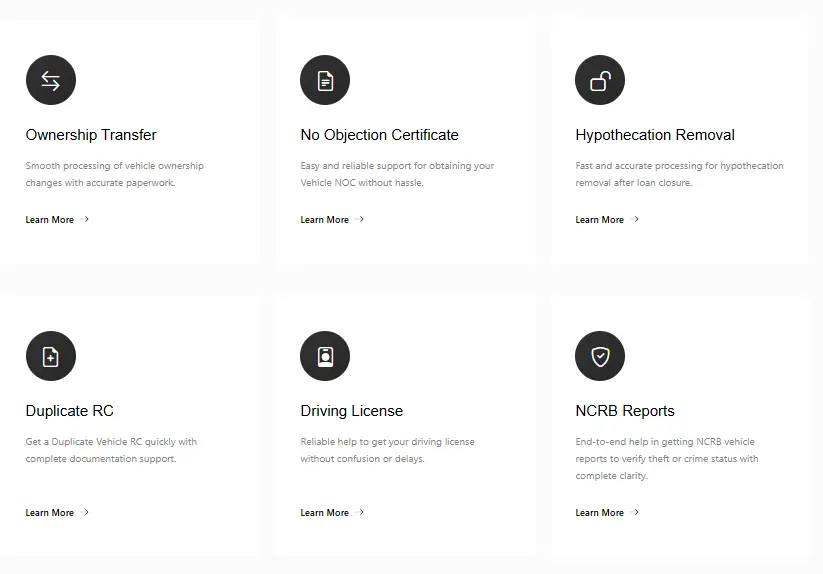
Fateh Legacy is an RTO and Driving Licence services portal designed for high-urgency search intent—people looking for quick help with Ownership Transfer (RC transfer), NOC, Hypothecation Removal, Duplicate RC, Driving Licence, and related documentation workflows.
✨ Project Snapshot
The website is built around a user-friendly discovery experience where users can select a service and then select a city/RTO before searching. That’s a strong foundation for SEO scalability because it naturally supports service-intent + location-intent combinations.
From an SEO perspective, this project wasn’t about “ranking one page.” It was about building a system that can grow safely and predictably across multiple services and multiple RTO zones—without falling into the common traps of duplicates, thin content, cannibalization, and crawl waste.
Website:
Fateh Legacy
SEO focus: Technical SEO + Local/Intent SEO + Scalable Location Pages + Content Clusters
The SEO Goal
RTO/DL searches are high urgency. The SEO system had to capture “ready-to-act” intent, scale across RTO zones, and build topical authority with guides that feed conversions.
What This SEO System Was Designed To Do
| Goal | Why It Matters |
|---|---|
| Capture urgent, high-intent searches | Target users who are ready to act—queries like “duplicate RC”, “hypothecation removal”, “RC transfer / ownership transfer”, “NOC for vehicle”, and “driving license help in [RTO/city]”. |
| Build scalable “Service + RTO” landing pages | Create RTO-specific pages (example format: “Driving License at HR98 Gurugram (South) RTO, Haryana”) to win long-tail local intent at scale. |
| Grow topical authority with blog clusters | Publish highly specific guides (Delhi processes, IDP, RC smart card, RTO codes) and internally link into the correct service pages. |
Key idea: Scaling wasn’t “more pages.” It was controlled growth—each new page launched with unique metadata, unique intent context, and clean internal linking so expansion doesn’t create ranking instability.
The Main SEO Challenges (and Why This Project Was Different)
Fateh Legacy required a scale-ready architecture. The risks weren’t “basic SEO.” The risks were duplicates, cannibalization, and crawl waste—exactly what happens when service + location pages grow without controls.
Challenge 1: Scaling location pages without creating duplicates
The biggest danger with “service + RTO” pages is similar titles/meta and similar body content. Search engines can treat those as near-duplicates, splitting signals and producing unpredictable outcomes.
How we handled it (unique intent pages, not copy-paste)
Every location page was treated as a unique intent page: unique title/meta, RTO-specific context (workflow cues + pain points), and unique FAQs aligned to that service/RTO combination.
Challenge 2: Cannibalization between blogs and service pages
Strong guides (Delhi RTO codes, driving licence process, etc.) can accidentally compete with service landing pages if intent framing and internal linking aren’t controlled.
How we handled it (hub-and-spoke intent control)
Blogs capture research intent (process, documents, timelines). Service pages capture action intent (get help, submit enquiry, service CTAs). Internal linking passes authority to conversion pages without confusing the primary ranking target.
Challenge 3: Performance & page experience for urgent traffic
RTO/DL users are often on mobile and in a hurry. Performance stability matters for both UX and search as the website scales across zones and services.
How we handled it (CWV stability mindset)
We used CWV logic (LCP, INP, CLS) and Search Console CWV grouping to keep templates stable—so growth doesn’t introduce layout shifts, slow interaction, or heavy pages that reduce conversions.
What Qaushik Labs Implemented
A scale-ready SEO system: crawl control, urgency-led on-page structure, real RTO entity pages, and blog clusters that push users into service flows.
1) Technical SEO & Crawl Control (Screaming Frog-led Methodology)
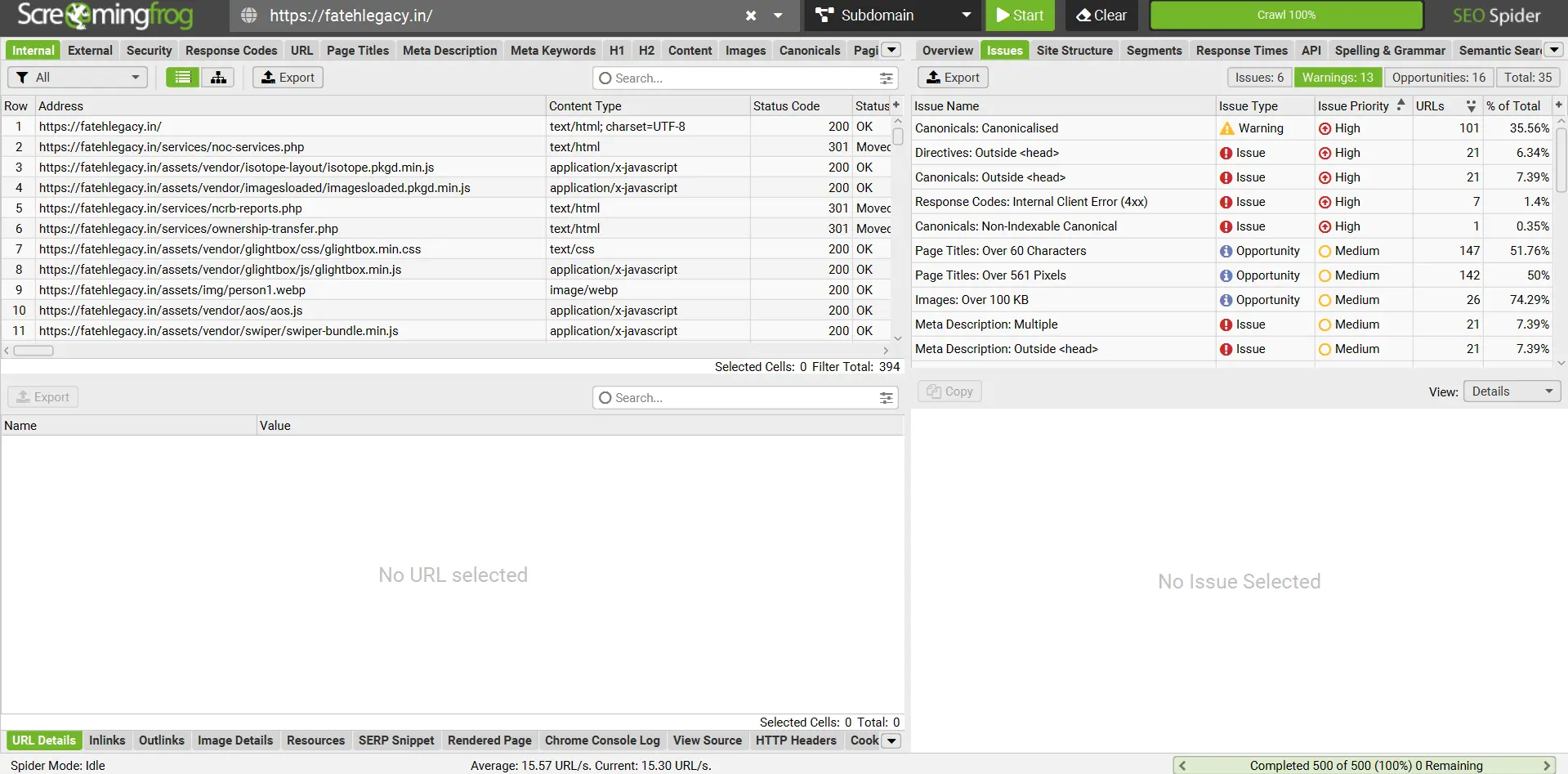
As the site expands into more RTO zones and service variations, technical SEO becomes “architecture.” We used crawl-based checks to prevent scaling issues like duplicates, crawl waste, and canonical inconsistencies.
Scaling risks we controlled
- Duplicate page titles
- Duplicate meta descriptions
- Exact duplicate pages / near-duplicates created by scaling
- Canonical inconsistencies (unexpected canonical targets)
- Crawl waste from repeated templates and non-essential indexable paths
Portfolio-safe outcome wording:
We built a system where new pages are launched with consistent SEO hygiene—unique metadata, clean canonicals,
and reduced duplicate risk—so scaling doesn’t create long-term ranking instability.
2) On-Page SEO That Matches User Urgency
RTO SEO isn’t about fancy copy—it’s about clarity and speed of understanding. We structured page content so users instantly see what the service is, who it’s for, what documents are required, the step-by-step flow, and FAQs that remove confusion.
Urgency-led content structure
- Service clarity: what it is + when you need it
- Eligibility: who it’s for + common edge cases
- Document checklist: what to keep ready
- Step-by-step flow: how the process works (simple, scannable)
- FAQs: the real confusion points users have in India
- Strong CTAs: “Get Help” positioned for fast action
Why this works: Urgency pages reduce drop-offs. Users don’t want an essay—they want “what to do next” and confidence before they enquire.
3) Location SEO Through Real “RTO Entity” Pages
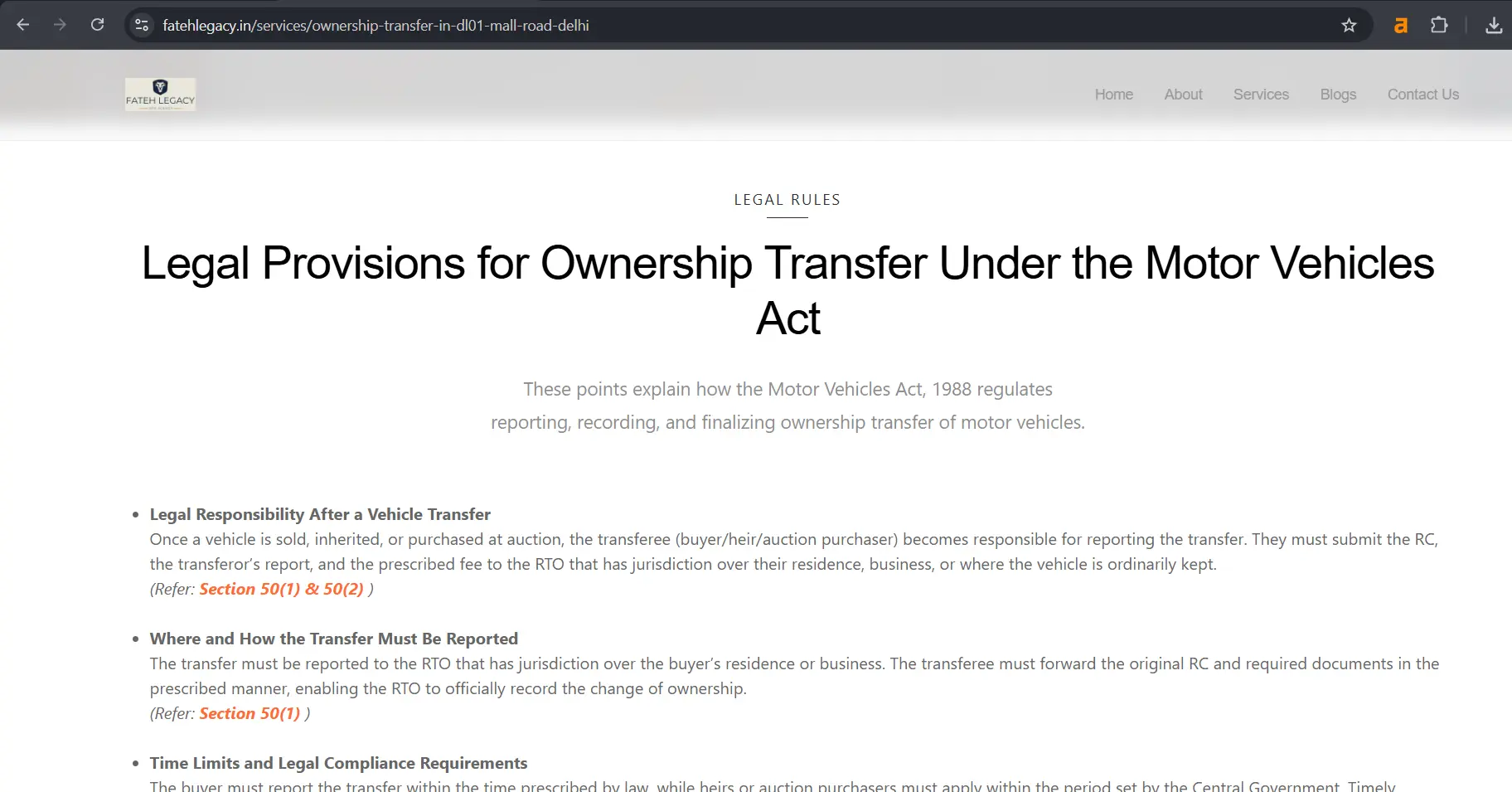
Fateh Legacy supports RTO-specific landing pages (example format: “Driving License in HR98 Gurugram (South) RTO, Haryana”). We treated these as SEO assets because users search by RTO code, RTO office area, and zone-based intent.
Why RTO entity pages are powerful
- Users search by RTO code (DL01–DL12, HR98, etc.)
- Users search by office area and jurisdiction
- Users search for agents/services by zone (high urgency intent)
- Service + RTO pages win long-tail without relying on one “main city” page
Website: Fateh Legacy
4) Content Cluster Strategy (Blogs That Drive Service Conversions)
Fateh Legacy publishes highly specific guides (Delhi processes, IDP, RC smart card guides, outside-state re-registration, DL/RC address updates, and DL01–DL12 RTO codes). These posts capture research intent and then feed users into service pages with clear CTAs.
How the cluster supports SEO
- Answer detailed questions (research intent: process, documents, timelines)
- Internally link to the correct service pages (conversion intent)
- Reduce user anxiety with clarity before enquiry (higher lead quality)
- Build topical depth around RTO codes, zones, and workflows
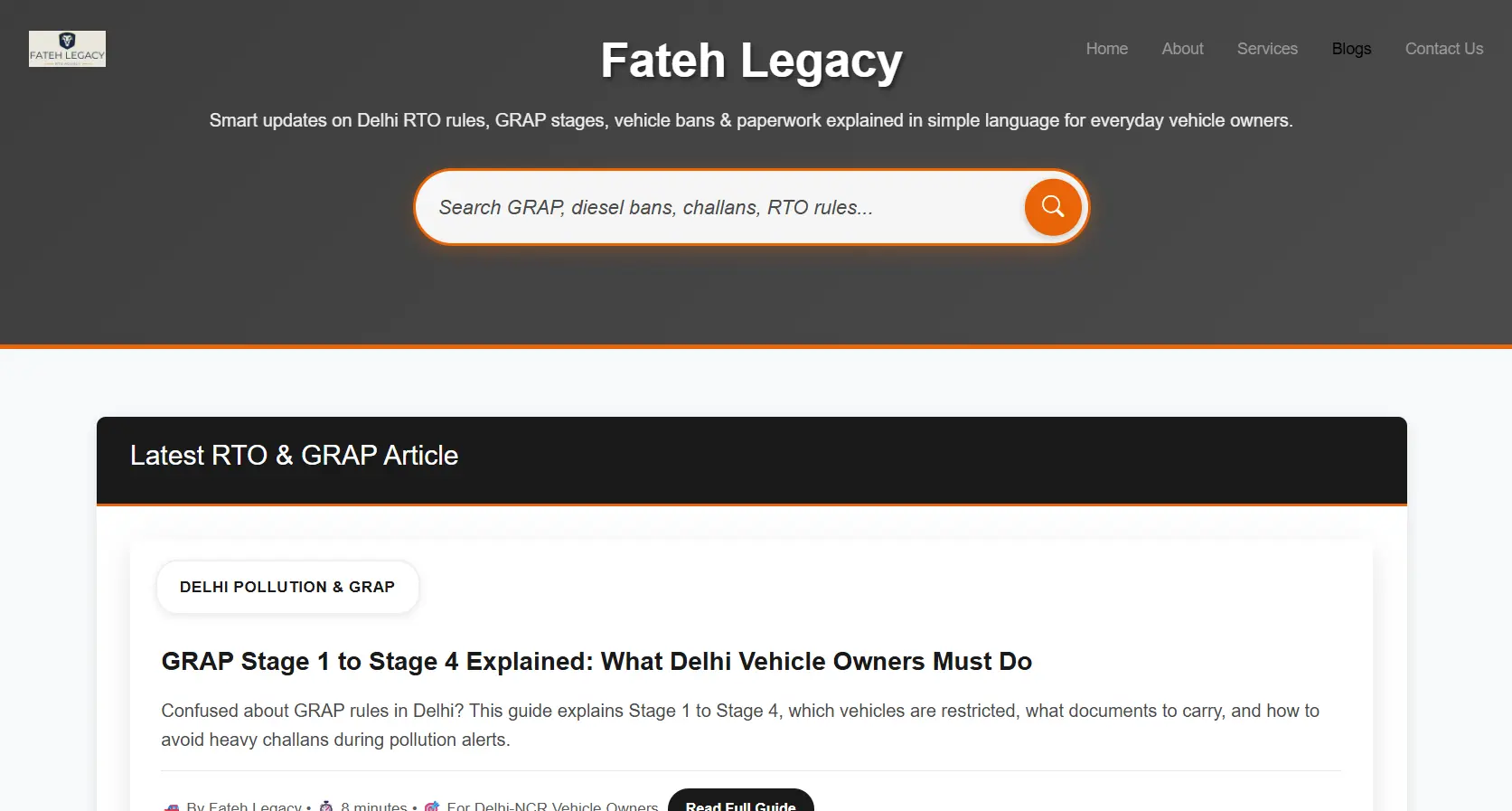
Intent control principle: Blogs rank for “how-to”. Service pages rank for “get help”. Internal linking passes authority without cannibalization.
Outcome Summary (Portfolio-Safe)
Truthful outcomes you can publish now—and add real screenshots/metrics later without rewriting the narrative.
What Improved After the SEO System Work
- Scaling control: new pages launched with unique metadata + intent context to reduce duplicate risk.
- Cleaner crawl signals: better canonical consistency and reduced “ranking unpredictability” from near-duplicates.
- Clearer intent mapping: blogs (research) support services (action) with internal linking and CTAs.
- RTO entity pages positioned for long-tail: service + RTO landing pages designed to win local searches at scale.
- Performance stability mindset: templates kept stable as the website expands (important for mobile urgency traffic).
Closing (portfolio-ready):
Fateh Legacy’s SEO strategy was built as a scalable system: service pages designed for conversions, RTO-specific landing pages for long-tail local visibility,
and blog clusters that build authority while feeding traffic into the right service flows. With crawl control (duplicates/canonicals) and performance stability
guided by CWV best practices, the website is positioned to scale across more RTO zones and services without losing SEO clarity.
Explore the project: Fateh Legacy
SEO Services :
Build long-term organic visibility with our SEO Services in Delhi focused on technical excellence, high-intent keyword strategy, and authority-building content. For brands targeting competitive global markets, explore SEO Services in Gurgaon engineered to improve rankings, strengthen domain authority, and drive scalable growth. If your goal is regional dominance, choose SEO Services in Noida to increase local search visibility and convert organic traffic into qualified business enquiries.
Frequently Asked Questions
SEO + scaling questions for an RTO/DL services portal.
Growth requires many pages across services and RTO zones. That increases the risk of duplicate content, cannibalization, and crawl waste if scaling isn’t controlled.
Duplicate titles/meta reduce clarity for search engines and can cause near-duplicate issues at scale. The safer approach is unique metadata per page and clean consolidation when pages are truly duplicative.
Blogs capture research intent (process, documents, timelines) and then internally link into service pages to pass relevance and authority—especially useful for Delhi-focused RTO topics.
Core Web Vitals measure real-world loading, interactivity, and visual stability. For urgent, mobile-heavy traffic, stability and speed reduce drop-offs and improve user experience as the site scales.
By ensuring each page has unique metadata, unique RTO/service context, and clear canonical signals. Exact duplicates can split ranking signals and create crawling inefficiencies, so scaling must be controlled.
RTO-specific landing pages such as “Driving License in HR98 Gurugram (South) RTO, Haryana” are ideal for long-tail local searches and can scale across more RTO codes and services.