Limited Period Offer Upto 25% off on your first engagement with us. Offer till 15 August 2026. Limited Period Offer
⚡ Qaushik • Commercial Growth SEO Scotland

Ecommerce, SaaS & B2B SEO Services in Scotland

Generate more online sales, software sign-ups, demo requests and qualified business enquiries by improving visibility across Google Search, Shopping surfaces and AI-powered search. Qaushik provides specialist SEO for ecommerce retailers, SaaS platforms, technology companies, manufacturers, distributors, marketplaces and B2B service providers across Scotland.

What normally produces commercial results first?

For ecommerce, start with indexation, high-value categories, product data and conversion friction. For SaaS and B2B, prioritise solution, feature, industry, comparison and pricing pages connected to accurate demo or lead tracking. Broad informational content should follow the commercial foundation.

Ecommerce SaaS and B2B SEO services in Scotland
Website
The primary search and conversion asset for ecommerce, SaaS and B2B growth
Product Data
Critical for ecommerce visibility across Search, Images, Lens and merchant experiences
AI Search
A growing research channel for comparisons, recommendations and complex buying questions
3–6mo
A common period for more consistent organic growth after the priority foundation is fixed

Free this month only

Scotland SEO strategy review

Clear next steps · Priority fixes · Growth opportunities

Get started free

No commitment · Pay after results

Local Scotland targeting
Live progress tracking
Full transparency

Why SEO Matters for Scottish Digital and B2B Companies

Ecommerce buyers, software users and business decision-makers use search differently, but each group relies on online evidence before taking action. They compare products, prices, specifications, integrations, implementation requirements, alternatives, reviews, suppliers and commercial outcomes. SEO helps a Scottish company appear during that research even when the buyer has never heard of the brand.

A connected commercial SEO strategy helps you
  • Capture non-brand demand before competitors control the shortlist
  • Reduce long-term dependence on paid acquisition and outbound prospecting
  • Build scalable visibility across products, solutions, sectors and markets
  • Connect organic traffic with revenue, demos, qualified leads and pipeline
Commercial SEO strategy for Scottish ecommerce SaaS and B2B businesses
Businesses we support
  • Online retailers, D2C brands and multichannel ecommerce stores
  • SaaS products, subscription platforms and technology scale-ups
  • B2B consultancies, professional services and specialist suppliers
  • Manufacturers, wholesalers, distributors and marketplaces

How Search Changes Across Ecommerce, SaaS and B2B

A shopper choosing a product behaves differently from a software buyer evaluating integrations or a procurement team comparing suppliers. Each model needs a distinct search architecture.

01
Transactions

Ecommerce Stores and Online Retail Brands

Categories, products, variants and purchase confidence

Ecommerce search demand is distributed across category, product, attribute, brand, problem and comparison queries. Strong performance depends on discoverable catalogue architecture, accurate product information and a frictionless mobile buying journey.

Search nuances
  • Typical searches include product type, size, material, specification, price, delivery and brand alternatives
  • Category pages often capture broader demand while product pages convert exact-item intent
  • Product structured data, Merchant Center feeds, shipping and returns information strengthen visibility and confidence
  • Faceted navigation must help customers without creating unlimited duplicate URLs
Ecommerce SEO for Scottish online retailers
02
Product Led

SaaS Platforms and Subscription Software

Problems, features, integrations and recurring revenue

SaaS buyers may begin with a business problem rather than a product category. The website must connect problem-aware research with features, use cases, integrations, proof, pricing and the correct trial or demo pathway.

Search nuances
  • Typical searches include “best software for”, “platform for”, integration, feature and competitor-alternative queries
  • Feature pages should explain capability while use-case pages explain business value
  • Comparison and alternative pages require fair, accurate and genuinely useful analysis
  • Activation, trial, demo and qualified pipeline data should inform SEO priorities
SaaS SEO services Scotland
03
Demand Gen

B2B Services, Consultancies and Technology Firms

Longer research journeys and multiple decision-makers

B2B search rarely ends with one page view. Users may research a problem, shortlist providers, inspect expertise, compare delivery models and return later with procurement, security or budget questions.

Search nuances
  • Target service, solution, industry, role, problem and location intent separately
  • Address commercial, operational, technical and implementation questions
  • Use case studies, team expertise, frameworks and outcomes to reduce perceived risk
  • Measure qualified opportunities and pipeline—not only form volume
B2B SEO and lead generation Scotland
04
Complex Sales

Manufacturers, Wholesalers and Distributors

Specifications, applications, sectors and supplier trust

Industrial and trade buyers often search by equipment type, material, technical specification, application, compliance requirement or sector. Generic corporate pages cannot capture this depth of demand.

Search nuances
  • Create category, application, industry and technical-resource architecture
  • Make data sheets, certifications, capacities, lead times and service coverage accessible
  • Separate trade, wholesale, project and replacement-part intent where relevant
  • Support sales teams with pages that answer pre-qualification questions
SEO for manufacturers wholesalers and distributors Scotland
05
Scale

Marketplaces and Large Product Catalogues

Crawl control, taxonomy and template quality

Large sites can generate thousands of valuable and low-value URLs simultaneously. SEO must help search engines find the pages that matter while preventing filters, internal search and duplicated templates from consuming resources.

Search nuances
  • Prioritise taxonomy, URL rules, pagination, canonicals and crawl pathways
  • Improve template uniqueness without manually writing every page
  • Manage inventory changes, expired listings and out-of-stock products deliberately
  • Use internal linking and sitemaps to surface strategic categories and listings
Marketplace and large catalogue SEO Scotland
06
Hybrid Local

Local B2B Companies, Showrooms and Hybrid Businesses

Website-led demand supported by genuine local signals

A showroom, trade counter, office or locally delivered B2B service may benefit from Google Maps, but the website remains the main place for specifications, sectors, capabilities, case studies and enquiries.

Search nuances
  • Use Google Business Profile for real eligible premises and locally delivered services
  • Develop useful Glasgow, Edinburgh, Aberdeen or regional pages only where the business has genuine relevance
  • Connect local proof to service, product and sector pages rather than relying on a generic city page
  • Track calls, quotation requests, direction clicks and sales-qualified enquiries separately
Local B2B SEO for Scottish companies and showrooms

Do These Businesses Rely More on the Website, Merchant Center or Google Business Profile?

The website is the core asset. Merchant Center expands ecommerce product visibility, while Google Business Profile supports eligible physical locations and local services. The correct priority depends on the revenue model.

The website carries the commercial argument

Products, solutions and services need crawlable pages that explain relevance, evidence and the next action. This is where most non-brand rankings and complex conversions are won.

  • Primary asset for category, product, feature, solution and industry searches
  • Essential for UK-wide and international reach
  • Supports AI retrieval, comparisons and decision-stage research
  • Controls the full purchase, trial, demo or enquiry journey

Merchant Center and GBP play different supporting roles

Merchant Center helps Google understand and distribute product data. GBP supports legitimate local discovery, but neither replaces a technically sound and commercially useful website.

  • Merchant Center is a major priority for ecommerce products and shopping surfaces
  • GBP is useful for shops, showrooms, offices and eligible service-area businesses
  • Online-only SaaS companies normally gain limited direct value from Maps rankings
  • Consistent organisation, product and location information improves trust across surfaces
Business model or queryPrimary search assetWhat normally creates the conversion
Product category or exact product searchCategory/product pages plus Merchant CenterPrice, availability, specifications, reviews, delivery, returns and checkout confidence
“Best CRM for construction companies”Use-case, comparison and product pagesFit, integrations, proof, pricing, implementation and a clear demo or trial
“Software development company Scotland”Service, sector and case-study pagesRelevant expertise, delivery capability, evidence and a qualified consultation path
“Commercial equipment supplier Glasgow”Organic pages plus local resultsProduct range, trade credibility, location, stock, delivery and quotation options
Enterprise technical evaluationWebsite, documentation and third-party proofSecurity, integration, scalability, procurement readiness and customer evidence
Scottish Digital Commerce and B2B Search Market

Ecommerce, SaaS and B2B SEO Competition Across Scotland

Scottish ecommerce, software and B2B companies compete across local, UK-wide and international search results. The competitive set can include specialist Scottish firms, established national brands, marketplaces, software directories, comparison platforms and well-funded international businesses.

Glasgow and Edinburgh have dense technology, professional-service and ecommerce markets. Aberdeen has strong competition across energy, engineering, industrial technology and specialist supply chains, while Dundee and central Scotland contain growing software, games, data, manufacturing and business-service ecosystems.

How We Build Commercial Search Visibility

  • Map categories, products, features, solutions, use cases and industries to the correct pages
  • Improve technical architecture, crawl efficiency, JavaScript accessibility and indexation
  • Strengthen product data, Merchant Center feeds, structured data and commercial page quality
  • Create comparison, integration, application and decision-stage content for complex buyers
  • Develop brand authority through original evidence, customer proof and relevant mentions
  • Measure revenue, sign-ups, demos, qualified leads and pipeline contribution

Our strategy connects Scotland-wide credibility with the commercial pages required to compete nationally and internationally, while supporting genuine local offices, teams, showrooms and service markets where location intent is relevant.

Ecommerce, SaaS and B2B campaigns are prioritised around revenue potential, search demand, sales-cycle value and the pages most likely to influence a purchase, sign-up, demo or qualified enquiry.

How We Do SEO for Ecommerce, SaaS and B2B Companies

A prioritised process covering commercial intent, technical architecture, product and solution content, authority, AI-search readiness and revenue attribution.

1

Commercial Search and Competitor Mapping

Weeks 1–2

We identify where demand, revenue potential and realistic ranking opportunity intersect.

What we do
  • Map product, category, problem, solution, feature, industry and comparison intent
  • Separate discovery, evaluation and purchase-stage queries
  • Review Scottish, UK and international competitors across organic and shopping results
  • Prioritise opportunities by demand, margin, lead quality and implementation effort
2

Technical Audit, Tracking and Crawl Control

Weeks 1–6

We remove barriers that prevent valuable pages from being discovered, understood or measured.

Foundation
  • Indexation, rendering, parameters, canonicals, pagination and sitemap analysis
  • Core Web Vitals, mobile templates and conversion-path performance
  • Product, revenue, trial, demo, call and qualified-lead tracking
  • Merchant Center, structured data and product-feed validation where relevant
3

Commercial Page Architecture

Month 1–3

We give important buyer intent a clear, useful and conversion-ready destination.

We build
  • Category, product, feature, integration, use-case, industry and service pages
  • Comparison, alternative, pricing and technical-evaluation content where justified
  • Internal links connecting educational research to commercial pages
  • Templates that can scale without creating thin or repetitive pages
4

Evidence, Expertise and Demand Capture

Month 2–6

Buyers need proof that the product or provider can solve the real problem.

Content priorities
  • Case studies, benchmarks, implementation guidance and product demonstrations
  • Original buyer guides, technical resources, documentation and FAQs
  • Customer evidence, expert authorship and transparent commercial information
  • Content for procurement, security, integration and return-on-investment questions
5

Authority, Digital PR and AI Readiness

Month 3+

We strengthen the signals that help search and answer systems trust and retrieve the business.

Growth work
  • Relevant links, partnerships, product mentions and expert contributions
  • Clear organisation, product, software and service entities
  • Structured data that accurately reflects visible page content
  • Content designed around natural buyer questions rather than keyword repetition
6

Revenue Analysis and Scalable Expansion

Month 3+

We scale the parts of the programme that contribute to commercial outcomes.

Measurement
  • Organic revenue, product performance, demos, qualified leads and pipeline
  • Assisted conversions across longer B2B buying journeys
  • Conversion-rate testing for priority templates and calls to action
  • Expansion into new categories, sectors, locations and international markets based on evidence

Realistic Ecommerce, SaaS and B2B SEO Timeline

Foundation and Quick Wins
First 30 Days
Early Visibility Movement
1–3 Months
Consistent Commercial Growth
3–6+ Months

Large catalogues, new SaaS domains, highly competitive UK keywords and international SEO programmes can require six to twelve months or longer. No legitimate provider can guarantee a fixed ranking or revenue date.

What Should You Choose First to Generate Sales or Leads Faster?

The quickest gains normally come from fixing commercial pages and technical problems already close to revenue. Publishing a large blog library before resolving indexation, product data or demo conversion is usually the wrong order.

Priority 2

Strengthen Revenue Pages

Improve the pages that match immediate purchase, demo or supplier-selection intent.

  • Priority categories and products
  • Solution, feature, integration and industry pages
  • Pricing, comparison and alternative content where appropriate
  • Strong internal links and commercially clear calls to action

Priority 3

Build Proof and Broader Demand

Expand once the commercial foundation can convert and report on new visibility.

  • Case studies, customer evidence and expert profiles
  • Buyer guides, technical resources and documentation
  • Digital PR, relevant links and product mentions
  • New sector, category and international opportunities

Ecommerce, SaaS and B2B SEO Insights for 2026

Search is becoming more conversational, multimodal and commercially integrated. Strong technical foundations and verifiable first-party information remain more important than tactical labels.

AI Search

Complex Questions Create New Discovery Paths

Buyers can ask AI systems to compare products, shortlist software or explain supplier options. Pages need clear facts, original evidence and enough depth to support follow-up questions.

Product Surfaces

Product Data Extends Beyond Blue Links

Accurate prices, availability, variants, delivery and returns can support visibility across product-rich results, Images, Lens and merchant experiences.

Multimodal Search

Images, Video and Demonstrations Matter More

Original product imagery, interface demonstrations, diagrams and technical visuals help both conversion and search understanding. Generic stock assets provide little product evidence.

Buyer Committees

One Page Rarely Satisfies Every B2B Role

Users, managers, technical evaluators, finance and procurement may require different evidence. Connected content should support the whole buying group.

Scaled Content

Programmatic Pages Need Strict Quality Control

Templates can support growth, but only when each page serves meaningful intent and contains useful differentiated information. Uncontrolled duplication creates crawl and quality problems.

Commercial Data

SEO Decisions Must Follow Revenue and Pipeline

Traffic can rise while lead quality falls. Product margin, activation, qualified opportunity and assisted conversion data should determine what is expanded next.

AI Overviews • AI Mode • Answer Engines

AI SEO for Scottish Ecommerce, SaaS and B2B Companies

Potential customers can now ask questions such as “Which Scottish CRM integrates with Xero and supports field teams?” or “What commercial equipment supplier delivers across Glasgow?” AI systems may combine information from product pages, documentation, reviews, profiles, case studies and trusted third-party sources.

AI visibility still depends on core SEO: crawlable pages, accurate product or service information, original expertise, clear business entities and consistent evidence. Special files, mass-generated pages and artificial mentions do not compensate for weak architecture or generic content.

We make products, software capabilities, sectors, integrations, proof and locations easier to understand and retrieve while improving consistency across the website, merchant data, organisation profiles and relevant external mentions.

Ecommerce, SaaS and B2B SEO Across Scotland

A Scotland-wide strategy can support local credibility while targeting UK and international demand. Location pages are developed only where there is a genuine office, team, service proposition or market opportunity.

West Scotland

Growth SEO for Glasgow

Compete across technology, ecommerce, professional-service and supplier searches with stronger commercial pages, technical performance and local proof.

Ecommerce & SaaS SEO Glasgow
Capital City

Growth SEO for Edinburgh

Build organic visibility for software, fintech, ecommerce, professional services and scaling technology businesses in a highly competitive market.

SEO Services Edinburgh
North-East

Growth SEO for Aberdeen

Target energy, engineering, industrial, software and specialist B2B demand with detailed capability, application and sector content.

SEO Services Aberdeen
Tayside

Growth SEO for Dundee

Support software, games, digital, ecommerce and specialist B2B companies through focused market and product visibility.

SEO Services Dundee
Central Scotland

Growth SEO for Stirling

Reach Scottish and UK buyers through stronger solution pages, technical foundations, expert evidence and conversion tracking.

SEO Services Stirling
Central Scotland

Growth SEO for Falkirk

Improve visibility for manufacturers, suppliers, trade businesses and service providers across central Scottish markets.

SEO Services Falkirk
Renfrewshire

Growth SEO for Paisley

Build local credibility and wider commercial reach for ecommerce, technology and B2B companies serving the Glasgow region.

SEO Services Paisley
Fife

Growth SEO for Dunfermline

Target relevant product, supplier, software and professional-service demand with useful pages and measurable enquiry pathways.

SEO Services Dunfermline
Commercial SEO Framework

Connecting Organic Visibility With Revenue and Pipeline

Digital businesses often have strong products but fragmented search architecture. Ecommerce stores may contain duplicated catalogue URLs, SaaS sites may rely on a small number of generic feature pages, and B2B companies may not address the detailed questions used by decision-makers.

Our framework connects technical performance, commercial landing pages, buyer-focused content, product or organisation data, authority development and conversion measurement. The objective is a scalable acquisition channel aligned with transactions, recurring revenue and sales-qualified opportunities.

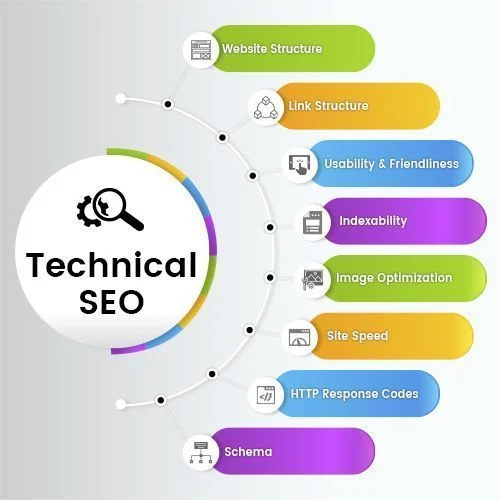
Technical and On-Site Priorities

  • Full crawl, indexation and rendering analysis
  • Category, product, feature and solution architecture
  • Internal linking, templates, canonicals and pagination
  • Product feeds, structured data and page performance
  • Conversion pathways for purchase, sign-up, demo and quote

Growth and Authority Priorities

  • Commercial keyword and market mapping
  • Use-case, sector, comparison and decision-support content
  • Case studies, demonstrations and customer evidence
  • Relevant digital PR, links and product mentions
  • Revenue, activation, qualified-lead and pipeline attribution
More Revenue ReachBroader visibility across products, solutions, sectors and buying stages
Scalable ArchitectureA search structure that can support new products, markets and use cases
Better AttributionClearer links between organic search, sales, sign-ups, demos and pipeline

For Scottish digital and B2B companies

Get a free commercial SEO visibility review

We will review your technical platform, product or solution coverage, search visibility, AI-search readiness, conversion tracking and competitive gaps, then identify the highest-priority opportunities.

Technical reviewCommercial page gapsAI-search readinessRevenue-path priorities

Build a Scalable Organic Growth Channel

We will assess your business model, products or services, technical platform, highest-value markets, competition and conversion journey before recommending a practical SEO roadmap.

Ready to Transform Your Business Digitally?

Get in touch with world's leading digital marketing experts for your business growth.

Email Us

Tap to view email

LinkedIn

Qaushik Labs

Location

Scotland

Frequently Asked Questions About Ecommerce, SaaS and B2B SEO

Practical answers for Scottish ecommerce retailers, software companies, manufacturers, suppliers and B2B service providers.

The website is the primary SEO asset for all three models. Ecommerce companies should also prioritise Google Merchant Center and accurate product data. Google Business Profile is most useful when the company has a real shop, showroom, office or locally delivered service, but it rarely replaces strong category, product, feature, solution and industry pages.
Technical fixes and improvements to established commercial pages can begin influencing performance within four to eight weeks. More consistent growth commonly develops over three to six months. New domains, competitive software categories, large catalogues and international campaigns may require six to twelve months or longer.
Start with tracking, indexation, site architecture and the pages closest to revenue. For ecommerce, this normally means priority categories, products, product data and checkout pathways. For SaaS and B2B, it means high-intent solution, feature, use-case, industry, comparison, pricing and demo pages.
Ecommerce SEO focuses heavily on category architecture, product discoverability, product data, faceted navigation, variants, stock, shipping, returns and transaction conversion. SaaS SEO maps problems, features, integrations, use cases, alternatives and buyer education to trials, sign-ups or demos.
B2B search often involves longer sales cycles, several decision-makers and more specialised language. The website must answer commercial, technical, procurement, implementation, security and return-on-investment questions while converting anonymous research into a qualified enquiry.
They should have separate pages when they represent distinct search intent and can provide genuinely useful, non-duplicative information. Creating thin pages for every minor variation can weaken quality and waste crawl resources, so the architecture should reflect meaningful buyer choices.
It is critical. Filters, parameters, pagination, JavaScript rendering, duplicate URLs, orphan pages, slow templates and inconsistent canonicals can prevent search engines from discovering and understanding valuable pages. Technical SEO must support both crawl efficiency and customer experience.
Yes. The strategy should separate local credibility from national and international demand. Scottish location pages may support real offices, teams or service areas, while scalable market, language and country architecture can target wider commercial opportunities without duplicating content.
Usually it is secondary. An eligible profile can support brand trust and local discovery for a genuine staffed location, shop or showroom. It should not be used to create artificial locations, and it will not replace product, category, feature or solution visibility in organic search.
AI SEO makes products, solutions, expertise and business evidence easier for search engines and AI answer systems to crawl, understand, retrieve and cite. It builds on strong technical SEO, clear entities, original content, structured data, accurate product information and consistent brand signals.
Content is not rewarded merely because it was written manually or produced with AI. It must be accurate, original, useful and aligned with real customer needs. Scaled generic product descriptions, superficial comparison pages and near-duplicate industry pages rarely create a durable advantage.
Competition is not limited to Scottish companies. Glasgow and Edinburgh businesses often compete with UK-wide and international brands, marketplaces, software review platforms, directories and heavily funded competitors. Aberdeen also has concentrated competition in energy, engineering, industrial and professional B2B markets.
Yes. Paid campaigns provide faster demand testing, while SEO builds a compounding acquisition asset. Search-term data, landing-page tests and conversion information can improve both channels. For B2B companies, SEO also strengthens the research journey before and after outbound contact.
We measure organic revenue, transactions, product visibility, trial and sign-up completions, demo requests, qualified leads, assisted conversions, pipeline contribution, sales quality and customer acquisition efficiency. Rankings and traffic are diagnostic indicators rather than the final commercial objective.
Call Chat Email WhatsApp