

When a potential customer in Glasgow types a question into ChatGPT, asks Perplexity to recommend a local agency, or queries Google Gemini for the best service provider in their area, whose business gets mentioned? In 2026, that question is no longer hypothetical — it is one of the most commercially important questions your business should be asking. Generative Engine Optimisation, or GEO, is the discipline of ensuring that AI-powered search tools cite, recommend, and surface your business when your target customers are asking the questions you should be answering.
This is not a distant future concern. AI-generated answers are already influencing buying decisions for Glasgow consumers and businesses every day, and the gap between companies that are visible in those answers and those that are invisible is widening quickly. Our AI SEO work across Scotland puts us at the centre of this shift, and in this guide we explain exactly what GEO is, why it matters urgently for Glasgow businesses, and what you need to do to start appearing in AI-generated responses for searches that matter to you.
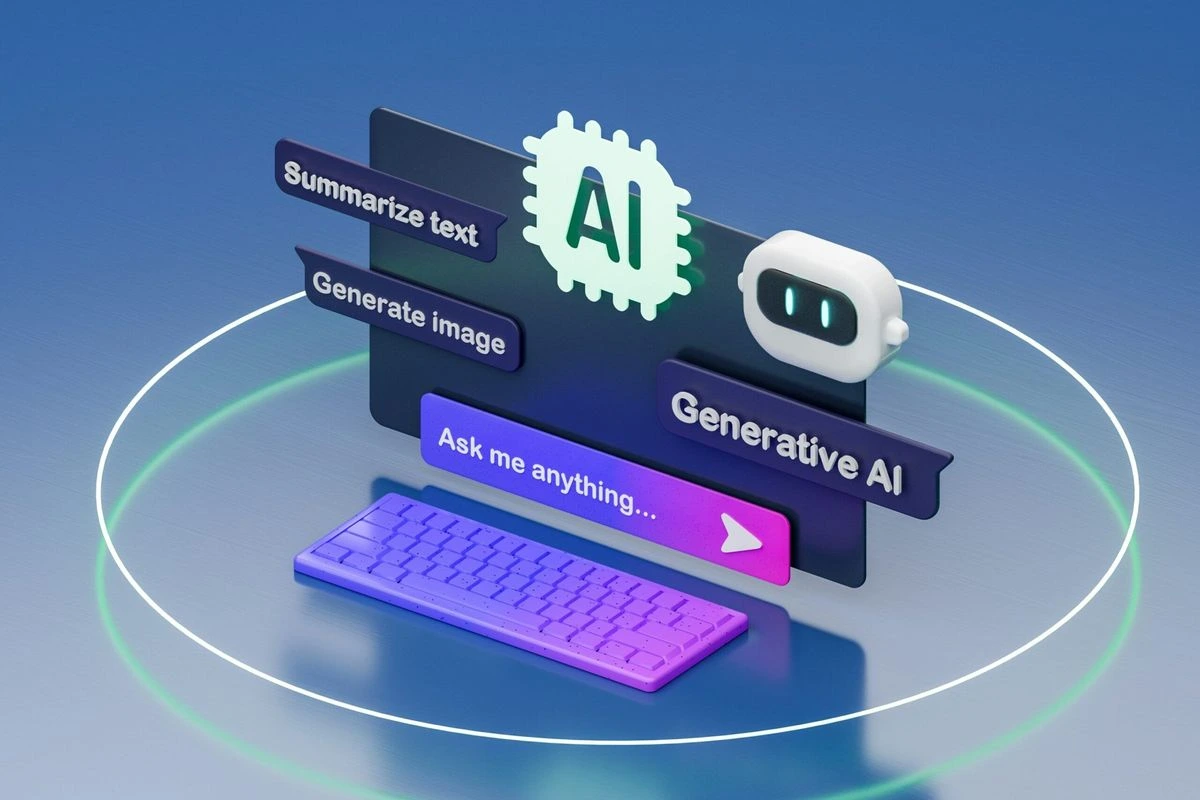
Generative Engine Optimisation is the practice of structuring, presenting, and distributing your content and digital presence in a way that makes it more likely to be selected, cited, and recommended by AI language models when they respond to user queries. Tools like ChatGPT, Perplexity, Google Gemini, Microsoft Copilot, and Claude are now answering millions of searches every day — not by returning a list of ten blue links, but by synthesising information from across the web into a single, authoritative-sounding response. The sources those tools draw from, and the businesses they mention by name, are not random. They are determined by a set of signals that GEO is designed to influence.
Traditional SEO focuses on ranking your pages highly in Google's search results so that users click through to your website. GEO operates at a different level: it focuses on ensuring that when an AI tool constructs an answer, your business, your expertise, and your content are what it draws on. For a detailed look at how this shift in search behaviour is already affecting web traffic, our analysis of the AI impact on web search provides essential context.
The distinction matters enormously. A user who asks ChatGPT "which digital agency in Glasgow should I use for a website rebuild?" and receives an answer that names your business is a warmer, more qualified prospect than almost any click from a traditional search result. They have received what feels like a personal recommendation from a trusted, authoritative source. The conversion potential of that kind of mention is significantly higher than a standard organic search result.
Glasgow's business environment is competitive across every sector — professional services, hospitality, retail, construction, healthcare, and technology. The businesses that win in this environment are increasingly those that earn visibility in the places their customers are actually searching. And in 2026, a substantial and growing proportion of those searches are happening inside AI tools, not inside traditional search engines.
The same challenge is reshaping digital marketing for Scottish businesses in every major city. Whether you are based in Edinburgh, Aberdeen, Dunfermline, Falkirk, or Paisley, the shift toward AI-mediated discovery is happening at the same pace. But for Glasgow businesses specifically, several factors make GEO particularly urgent:
High-Value Service Queries Are Moving to AI
When a Glasgow business owner researches a new accountant, solicitor, marketing agency, or
IT provider, they are increasingly using AI tools to shortlist options before they ever
visit a website. These are exactly the high-intent, high-value queries where being cited
by an AI can translate directly into qualified enquiries. If your business is not appearing
in those AI responses, you are invisible at the moment of highest commercial intent.
Google's Own AI Features Are Reshaping Local Search
Google's AI Overviews — the generated summaries that now appear above traditional search
results for many queries — are directly affecting how Glasgow businesses are found for local
searches. Our analysis of
how Google Gemini is affecting website traffic
documents the real-world impact of this shift on organic click-through rates. Businesses
that are not optimising for these AI-generated overviews are seeing their effective search
visibility decline even if their traditional rankings remain unchanged.
The Window for Early Advantage Is Still Open
GEO is a relatively new discipline. The Glasgow businesses that invest in it now will build
a structural advantage over competitors who wait. The dynamics of AI citation are not unlike
the early days of SEO: the businesses that understood and acted on the new rules first
gained positions that took competitors years to displace. The same pattern is emerging now,
and the window for early movers is narrowing.
AI Visibility Compounds Over Time
AI tools are trained and updated on patterns of content quality, authority, and citation.
A business that consistently produces credible, well-structured, authoritative content
builds a growing body of material that AI systems associate with expertise in their field.
That compounding effect means the sooner you start, the greater the advantage you build.
Understanding GEO requires a working understanding of how AI tools like ChatGPT, Perplexity, and Google Gemini select and synthesise the content they use to construct their answers. The mechanisms are not identical across all platforms, but several core principles apply broadly. Our detailed breakdown of how ChatGPT selects content goes deeper on the specifics, but here is the essential framework:
Authority and Trust Signals
AI tools draw heavily on content from sources they perceive as authoritative. This is determined by a combination of factors: the age and reputation of a domain, the quantity and quality of inbound links from other trusted sources, the presence of named expert authors with verifiable credentials, and whether the content is referenced or cited by other credible sites. For Glasgow businesses, this means that building genuine digital authority — through quality backlinks, professional profiles, and consistent mention across reputable directories and publications — is foundational to GEO. Our analysis of how backlinks influence ChatGPT rankings explains this relationship in practical detail.
Content Structure and Clarity
AI models are significantly more likely to cite content that is clearly structured, logically organised, and written in a format that makes its key claims easy to extract. Content that uses clear headings, concise paragraphs, well-organised lists, and explicit answers to specific questions is far more "AI-readable" than dense, poorly structured prose. This is one of the areas where many Glasgow business websites fall short: their content was written to impress human visitors browsing at leisure, not to provide precise, extractable answers to specific questions.
Comprehensiveness and Depth
AI tools prefer sources that cover a topic comprehensively rather than superficially. A page that provides a thorough, expert-level treatment of a subject — anticipating follow-up questions, addressing nuances, and providing genuine insight — is far more likely to be cited than a thin page that skims the surface. This has significant implications for content strategy: depth and substance consistently outperform volume.
Factual Accuracy and Verifiability
AI systems are increasingly calibrated to prefer content that is factually accurate, internally consistent, and corroborated by other reliable sources. Content that makes unverifiable claims, contains factual errors, or contradicts established evidence is deprioritised. This places a premium on producing content that is genuinely accurate, properly researched, and honest about the limits of what it knows.
Freshness and Recency
For queries where recency matters — current best practices, recent developments, up-to-date pricing, or evolving regulations — AI tools give weight to content that is demonstrably current. Regular content updates, clear publication and revision dates, and timely coverage of relevant developments in your industry all signal freshness to AI systems. Our piece on how ChatGPT weights different sources examines how recency interacts with other signals in practice.
Entity Recognition and Brand Mentions
AI tools build associations between named entities — businesses, individuals, locations, and organisations — and the topics, attributes, and qualities that are consistently associated with them across multiple sources. If your Glasgow business is consistently mentioned in connection with a particular service, quality, or area of expertise across a range of credible online sources, AI systems begin to recognise and reflect that association. This is why consistent, positive brand presence across the web matters far beyond its direct traffic value.
Effective GEO requires action across several interconnected areas. Here is what Glasgow businesses need to prioritise:
1. Build a Comprehensive, Expert-Level Content Library
The single most important GEO investment you can make is producing content that genuinely answers the questions your target customers are asking AI tools. This means moving beyond thin service pages and short blog posts into substantive, expert-level content that treats each topic with the depth and rigour that establishes authority.
For a Glasgow law firm, this might mean comprehensive guides to specific areas of Scottish law written by named solicitors. For a Glasgow accountancy practice, it means detailed, accurate content on tax planning, VAT, and business structuring that goes significantly deeper than competitors' surface-level overviews. For a Glasgow construction company, it means authoritative coverage of building regulations, project planning, and material selection that reflects genuine trade expertise. The principle is consistent: your content should be the best available answer to the questions your customers are asking.
2. Optimise Content Structure for AI Extraction
Structure your content so that key information is easy for AI systems to identify and extract. Practical steps include:
- Use clear, descriptive headings that directly state what each section covers
- Write direct, precise answers to specific questions — ideally in the first sentence of each section, before expanding with detail
- Use FAQ sections to address common questions in a format AI tools find highly extractable — our own analysis of how to get your content cited by ChatGPT identifies FAQ structure as one of the most reliable GEO tactics
- Use numbered and bulleted lists for processes, comparisons, and multi-part recommendations
- Include explicit statistics, dates, and specific claims that make your content factually precise rather than vaguely general
- Ensure every page has a clear, crawlable HTML structure with logical heading hierarchies (H1, H2, H3) rather than relying on visual formatting alone
3. Establish Named Expert Authorship
AI tools increasingly associate authoritative content with identifiable human experts rather than anonymous corporate voices. Attributing your content to named individuals within your business — with linked professional bios, social profiles, and consistent mention across other credible platforms — builds the kind of entity recognition that improves AI citation rates. A Glasgow dentist whose educational content is consistently attributed to a named, credentialled practitioner with a LinkedIn profile and mentions in local professional directories is far more likely to be cited than an identical article published anonymously under a generic company brand.
4. Build Authoritative External Citations
Being mentioned, linked to, and cited by credible external sources remains one of the strongest GEO signals. For Glasgow businesses, this means:
- Earning coverage in Scottish business publications and local news outlets
- Contributing expert commentary or guest content to industry publications relevant to your sector
- Securing listings and profiles on authoritative directories and professional membership bodies
- Building genuine backlink relationships with complementary Glasgow businesses and sector organisations
- Participating in local business communities, awards, and events that generate credible online mentions
5. Strengthen Your Local Digital Footprint
For queries with local intent — "best accountant in Glasgow", "Glasgow web agency for small businesses", "recommended plumber in the West End" — AI tools draw on local signals including Google Business Profile data, review content, local directory listings, and location-specific content on your website. Maintaining an accurate, complete, and actively managed Google Business Profile is an important GEO input for any Glasgow business targeting local customers. The local search AI revolution has fundamentally changed how this data is used, and the implications for Glasgow businesses are significant.
6. Ensure Technical Foundations Support AI Crawling
AI tools need to be able to access, crawl, and interpret your content. Common technical barriers include content rendered entirely in JavaScript that AI crawlers cannot read, missing or misconfigured robots.txt directives that inadvertently block AI tools, slow page load speeds that cause crawlers to time out, and poorly structured HTML that obscures the logical organisation of your content. A professional website audit will identify any technical barriers to AI crawling alongside the broader performance and UX issues that affect your overall digital presence.
7. Monitor AI Mentions and Iterate
GEO is not a one-time project — it is an ongoing process of producing authoritative content, building citations, and monitoring how AI tools are representing your business. Regularly testing how different AI tools respond to queries relevant to your business, tracking which of your content pieces are being drawn upon, and identifying gaps where competitors are being cited instead of you provides the intelligence needed to continuously refine your approach.
GEO and traditional SEO share a foundation — both require high-quality content, technical site health, and credible authority signals — but they differ in important ways that affect how you prioritise your activity. Understanding those differences is essential for any Glasgow business trying to allocate its digital marketing budget effectively in 2026.
The Outcome Is Different
Traditional SEO aims to place your web pages in the top positions of a search results page,
generating clicks to your website. GEO aims to have your business, content, or expertise
cited within an AI-generated answer — which may or may not generate a click, but which
carries significant influence over the reader's decision-making. For service businesses in
particular, being cited as a recommended provider in an AI response can be more commercially
valuable than a first-page search ranking.
Keywords Matter Less; Topics and Questions Matter More
Traditional SEO has long centred on keyword targeting — optimising specific pages for
specific search terms. GEO operates more at the level of topics and questions. AI tools
are trying to answer a user's underlying question, not match a keyword string. Content
that genuinely, comprehensively addresses a topic area — anticipating the full range of
related questions a user might have — performs significantly better in GEO than content
narrowly optimised for a single keyword.
Brand and Entity Recognition Carries More Weight
In traditional SEO, a well-optimised page from a relatively unknown domain can rank highly
for competitive terms. In GEO, the credibility and recognition of the entity behind the
content carries substantially more weight. Building your brand's recognised authority
in your sector — through consistent publishing, external citations, and professional
reputation — is a more fundamental GEO requirement than it has ever been for traditional
SEO.
They Reinforce Each Other
Despite these differences, GEO and traditional SEO are not in conflict — they are
complementary. The same high-quality, well-structured, authoritative content that
improves your AI citation rates also tends to perform well in traditional search. The
same technical site health that makes your content accessible to AI crawlers also
supports your Google rankings. Businesses that invest in both disciplines in parallel
build a digital presence that is resilient to the continued evolution of how search
works. For a grounding in the traditional SEO fundamentals that underpin both disciplines,
our SEO beginner's guide remains a
useful starting point.
Measuring GEO is less straightforward than measuring traditional SEO, but it is far from impossible. Glasgow businesses investing in GEO should track their performance across several dimensions:
AI Citation Monitoring
Regularly test how major AI tools — ChatGPT, Perplexity, Google Gemini, and Microsoft
Copilot — respond to the queries your target customers are most likely to ask. Document
which tools cite your business, on which queries, in what context, and with what
characterisation. This provides a baseline and allows you to track improvement over time
as your GEO work takes effect. Our guide to
checking your website's performance on ChatGPT
walks through a practical approach to this kind of testing.
Brand Search Volume
Increased AI visibility tends to drive increases in branded search — people who have seen
your business mentioned in an AI response and then search for your name directly in Google.
Tracking branded search volume through Google Search Console provides an indirect but
meaningful indicator of growing AI visibility.
Referral Traffic from AI Platforms
Some AI tools, particularly Perplexity and Google Gemini with its links feature, do generate
direct referral traffic when they cite your content. Monitoring referral traffic from these
sources in your analytics platform gives you a direct measure of the traffic value being
generated by AI citations.
Content Performance Metrics
Pages that are being cited by AI tools tend to show characteristic patterns in their
analytics: longer average session times as users engage deeply with the content, lower
bounce rates, and more direct navigation rather than search-driven visits. Tracking these
patterns across your most important content pages helps identify which pieces are earning
AI traction and which need further development.
Competitor Comparison
Systematically testing how AI tools respond to the same queries when asked about your
competitors — and comparing those responses to what they say about your business —
provides a competitive intelligence picture that should inform your content priorities.
GEO is a relatively new discipline, and not every agency claiming to offer it has the depth of understanding or the practical experience to deliver meaningful results. Here is what Glasgow businesses should look for when choosing a GEO partner:
Genuine Understanding of How AI Tools Work
Ask prospective partners to explain, in specific terms, how ChatGPT, Perplexity, and
Google Gemini select and cite content. A credible GEO provider should be able to articulate
the key signals — authority, structure, comprehensiveness, entity recognition — clearly and
accurately, and should be able to point to concrete examples of how their work has
influenced AI citation for previous clients.
Content Strategy Capability
Because authoritative, expert-level content is the foundation of GEO, your partner needs
to have genuine content strategy and production capability — not just technical SEO skills.
Assess the quality and depth of the content on their own site and in their case studies.
If their own content is thin, generic, or poorly structured, that tells you something
important about what they will produce for you.
Integration with Broader Digital Marketing
GEO does not exist in isolation. It works in combination with technical SEO, content
marketing, link building, and your overall brand presence. A GEO partner who approaches
the discipline in isolation — without reference to how it connects with your other digital
marketing activity — will deliver inferior results to one who integrates it into a coherent
overall strategy. At Qaushik Labs, our GEO work is built into a broader digital marketing
approach that spans
web development,
technical SEO, content strategy, and
digital marketing across Scotland.
Transparent Measurement and Reporting
Given that GEO measurement is still evolving, be cautious of any provider who claims to
offer precise, guaranteed outcomes. A credible partner will be honest about what can be
measured, what the leading indicators are, and how results typically emerge over time.
They will also build a reporting framework with you at the outset so that progress can
be tracked consistently.
Local Market Knowledge
For Glasgow businesses targeting local customers, a partner with genuine knowledge of
the Glasgow and Scottish business landscape adds significant value. Understanding the
local competitive environment, the publications and directories that carry authority with
Scottish AI systems, and the specific search behaviours of Glasgow consumers informs
better GEO strategy than a generic national approach. Our team works with businesses
across
Glasgow,
Edinburgh,
Aberdeen,
Falkirk,
Dunfermline, and
Paisley,
giving us a depth of Scottish market knowledge that informs everything we do.
The way your customers find businesses like yours is changing faster than at any point in the history of digital marketing. AI-powered search tools are not a niche technology or a future trend — they are already influencing purchasing decisions for Glasgow consumers and businesses every single day. And the businesses that appear in those AI-generated answers are earning a quality of commercial visibility that traditional search rankings, at their best, have rarely matched.
Generative Engine Optimisation is the discipline that closes the gap between where your business currently sits in the AI landscape and where it needs to be. It demands genuine investment in authoritative content, technical foundations, and credible external recognition — but it rewards that investment with the kind of compounding, structural visibility advantage that only early movers enjoy.
For Glasgow businesses, the opportunity is real and the window is still open. The question is not whether to invest in GEO, but how quickly you can start building the foundations that will make your business the answer AI tools reach for when your customers are asking the questions you should own.
Businesses investing in digital marketing services across Scotland, digital marketing services in Glasgow, digital marketing services in Edinburgh, and digital marketing services in Aberdeen can benefit from establishing strong GEO foundations today. The same applies to companies focused on plumbing advertising in Aberdeen and real estate advertising in Aberdeen, where visibility within AI-generated answers may become an increasingly important source of qualified enquiries and long-term growth.
Ready to Transform Your Digital Presence?
Let Qaushik Labs help you implement growth-focused solutions for your business. From websites and SEO to ads and automation, we’re here to help you generate better leads and revenue.
Get Started TodayGenerative Engine Optimisation is the practice of making your business's content, authority, and digital presence more likely to be cited and recommended by AI-powered tools like ChatGPT, Perplexity, and Google Gemini when users ask questions relevant to your products or services. It matters for Glasgow businesses because a significant and rapidly growing proportion of commercial searches — particularly high-intent queries about service providers, professionals, and local businesses — are now being answered by AI tools rather than traditional search engines. Being cited in those AI responses carries significant commercial value.
Traditional SEO aims to rank your web pages highly in Google's search results, generating clicks to your website. GEO aims to have your business cited within AI-generated answers, which influences purchasing decisions regardless of whether the user clicks through. GEO places greater emphasis on content depth, expert authorship, entity recognition, and topical authority than on keyword targeting. The two disciplines share foundational requirements — quality content, technical site health, and credible authority signals — and work best when pursued together rather than in isolation.
The most commercially significant AI tools for Glasgow businesses in 2026 are ChatGPT (which now performs web searches and generates cited responses), Perplexity (which is particularly influential for research-led purchase decisions), Google Gemini (whose AI Overviews appear directly in Google search results), and Microsoft Copilot. Each tool has somewhat different citation behaviours, but the same foundational GEO practices — authoritative content, strong structure, credible external citations, and technical accessibility — improve your visibility across all of them.
GEO results typically emerge over a period of three to nine months, depending on the current state of your online presence and the competitiveness of your sector. Businesses that already have a strong content foundation and credible domain authority tend to see earlier improvements. GEO is a compounding discipline — the more authoritative content you produce and the more credible citations you earn over time, the more consistently AI tools draw on your business as a source. Early results are often visible in branded search volume and direct referral traffic from AI platforms before full citation rates peak.
Not necessarily, but your existing website must meet certain technical and content standards to support GEO effectively. Content must be crawlable by AI systems, well-structured with clear headings and logical HTML, and substantive enough to demonstrate genuine expertise. If your current site has significant technical barriers, thin content, or poor structure, addressing those issues — whether through a full rebuild or a targeted improvement programme — will substantially improve your GEO outcomes. A professional website audit is a useful first step to identify exactly what needs to change.
The most effective GEO content is expert-level, comprehensive, and directly answers the specific questions your target customers are asking AI tools. This typically means in-depth guides and explainers on topics relevant to your services, FAQ content that addresses common customer questions precisely, thought leadership pieces attributed to named experts in your business, and location-specific content that helps AI tools associate your expertise with Glasgow and Scotland. Breadth of topical coverage matters — a comprehensive library of quality content covering your entire area of expertise outperforms a handful of isolated pages.
The most direct method is systematic manual testing: using ChatGPT, Perplexity, Google Gemini, and Microsoft Copilot to ask the questions your target customers are most likely to ask, and recording how each tool responds, whether your business is mentioned, and how it is characterised. You can also monitor referral traffic from AI platforms in your website analytics, track branded search volume through Google Search Console, and use emerging AI monitoring tools that automate parts of this process. Our team can conduct a structured GEO audit that gives you a clear baseline picture of your current AI visibility.
GEO is available to — and in some ways particularly advantageous for — small and medium-sized Glasgow businesses. Large brands have established recognition advantages, but AI tools are not simply deferring to brand size: they are responding to content quality, topical authority, and credible citation. A well-positioned local expert with genuinely authoritative content in a specific niche can achieve better GEO results than a large generalist competitor with weaker, more generic content. The playing field in GEO is more level than it has ever been in traditional paid advertising.