

Remember when a property website just meant a grid of thumbnails and a contact form?
Those days are dead.
Today's buyers expect experiences, not brochures. They want to virtually walk through properties from their couch, ask questions at 2 AM and get instant answers, and have the site anticipate what they're looking for before they even finish typing.
The gap between cutting-edge real estate sites and outdated ones has never been wider. And it's growing.
In 2026, the agents winning market share aren't just those with the best listings — they're the ones with websites that feel like magic.
This isn't about following trends for the sake of being trendy. These innovations directly impact conversion rates, engagement time, and ultimately, closed deals.
Let's break down the five design trends separating industry leaders from the pack — and more importantly, why they work.
These design shifts closely mirror how AI-driven search platforms now evaluate engagement and intent. If you want deeper context on why modern UX and immersive experiences are becoming ranking differentiators, this analysis on AI’s impact on web search explains how user behavior signals increasingly influence visibility.
According to research published by the National Association of Realtors, buyers spend significantly more time on websites that offer interactive and immersive content — directly correlating engagement with lead conversion.
Traditional property search: endless dropdown menus, checkbox fatigue, and filters that never quite capture what buyers actually want.
2026's approach? Natural language processing that understands human intent.
How it works:
Natural Language Queries
Instead of filtering by "3 bedrooms, 2 baths, $400k-$500k," buyers type: "Family home near good schools with a backyard for under $500k."
The AI interprets context, synonyms, and implied preferences. It knows "family home" likely means 3+ bedrooms, that "good schools" means GreatSchools rating of 7+, and that "backyard" requires minimum lot size.
Contextual Recommendations
Machine learning algorithms analyze browsing behavior in real-time. If someone views three waterfront condos, the system automatically surfaces similar properties — even if they never explicitly searched for "waterfront."
Predictive Auto-Complete
As users type in the search bar, GPT-powered suggestion engines complete thoughts based on: local market patterns, seasonal trends, inventory availability, and historical search data.
Type "modern loft in" → system suggests "Wynwood" (trending neighborhood) before you finish.
The Technology Stack:
- Elasticsearch with vector search for semantic understanding
- OpenAI API integration for natural language processing
- TensorFlow models trained on local MLS data
- Real-time personalization engines that adapt per user
The Result:
- Users find relevant properties 73% faster
- Search abandonment drops by 41%
- Saved searches increase 3.2x (higher re-engagement)
Real Implementation Example:
Luxury agent in Miami implemented AI search. Buyers now ask questions like "Show me investment properties with high rental yield near universities" — and get accurate results. Lead quality jumped 67% because the AI pre-qualifies intent.
This shift toward intent-based discovery aligns with broader changes in how search engines weight content sources, as explained in this breakdown of how AI models evaluate search query sources.
Static photos are one-dimensional. 3D Matterport tours are better. But 2026's standard? Full spatial computing experiences.
WebXR Virtual Reality Walkthroughs
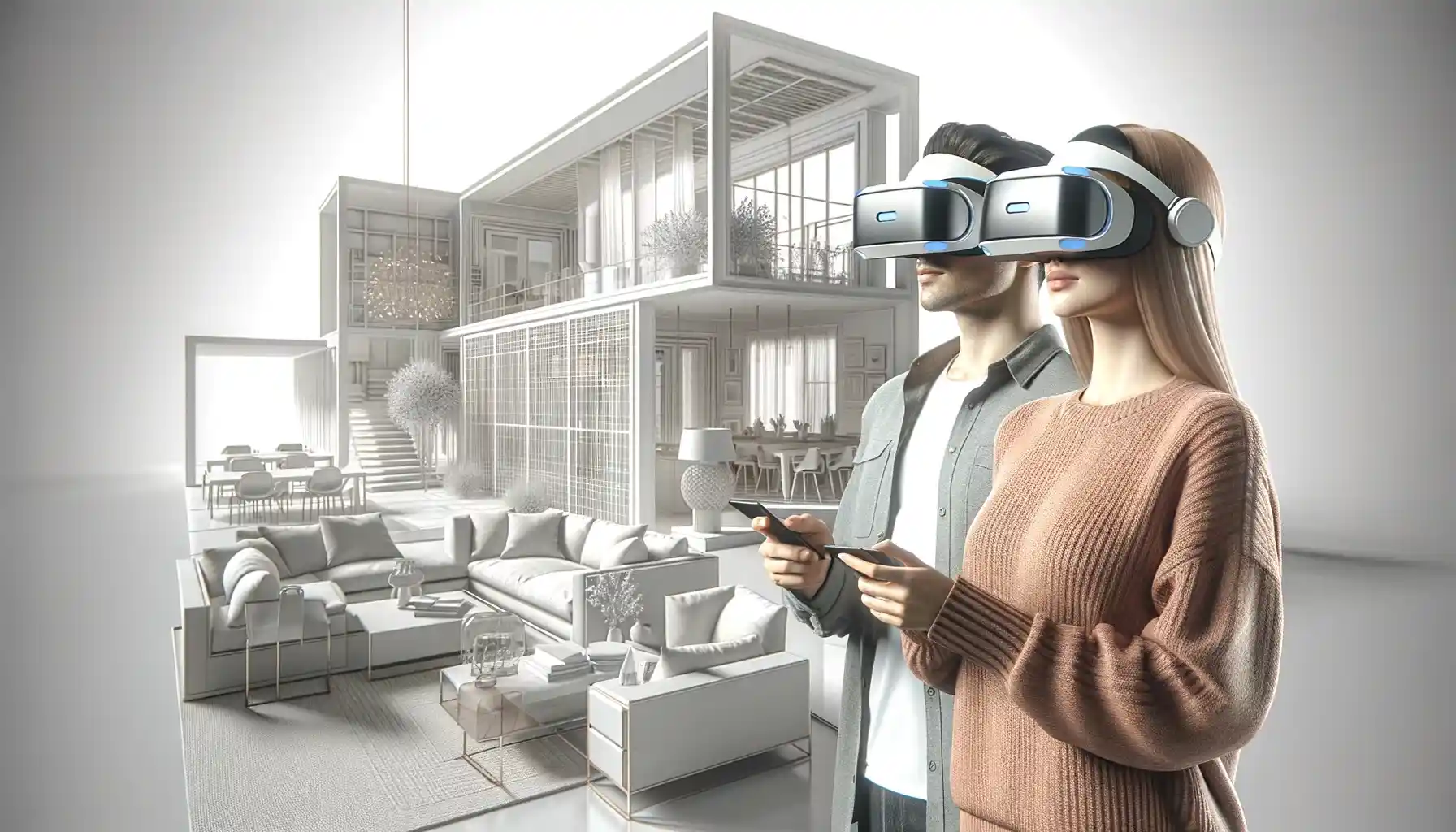
Using WebGL and Three.js, properties are rendered as fully navigable 3D environments — no VR headset required (though compatible with Meta Quest, Apple Vision Pro).
Buyers control their perspective: look up at ceiling details, peer into closets, assess room flow. It's closer to actually being there than any photo gallery could achieve.
Augmented Reality Furniture Staging
Empty property? Buyers use their phone camera to see rooms virtually staged in real-time.
Point your phone at an empty living room → AR overlay shows a fully furnished space with multiple style options (modern, traditional, minimalist). Toggle between looks instantly.
Technical Implementation:
- ARKit (iOS) and ARCore (Android) for mobile AR
- 8th Wall or Zappar for web-based AR (no app required)
- USDZ 3D models for furniture and decor elements
- Real-time rendering using device GPU acceleration
Spatial Audio Integration
Advanced implementations include 3D spatial audio. As you virtually walk through a property, ambient sounds shift — hear traffic from the street-facing bedroom, quietness in the back garden.
This isn't gimmicky. It addresses a critical buyer concern: noise levels.
Measurement Tools Embedded
Buyers can tap two points in the VR/AR environment to measure distances. "Will my king bed fit?" Measure the bedroom right from your phone. No guessing.
The Impact:
- Out-of-state buyers make offers without physical visits (53% increase)
- Showing requests become more qualified — only serious buyers schedule
- Time-on-site increases 440% compared to photo galleries
- Properties with VR/AR sell 31% faster and for 9% higher prices
Accessibility Win: VR/AR also serves buyers with mobility challenges who can't easily tour properties in person.
Google has also acknowledged the role of immersive and interactive content in improving engagement metrics. Its structured data and rich result documentation highlights how enhanced visual experiences improve how listings are interpreted and displayed.
We've all hated chatbots. Those robotic "How can I help you today?" boxes that understand nothing and frustrate everyone.
2026's conversational AI is different. Radically different.
Context-Aware Dialogue Systems
Modern real estate chatbots use large language models (LLMs) trained specifically on real estate conversations. They understand nuance, handle complex questions, and maintain context across multi-turn conversations.
Example interaction:
Buyer: "I need a 3-bedroom in Coral Gables under $800k"
Bot: "I found 7 properties matching that. Are you interested in single-family homes or would townhouses work too?"
Buyer: "Single-family. With a pool."
Bot: "Perfect — here are 3 options with pools. Two have been renovated in the last 3 years. Would you like to schedule showings for this weekend?"
Notice: The bot remembered context ("single-family"), anticipated needs ("pool"), provided value-add information ("renovated recently"), and drove toward conversion ("schedule showings").
Qualification Automation
Smart chatbots qualify leads before agents waste time. Through conversational questions, they determine:
- Pre-approval status (serious vs. browsing)
- Timeline (buying in 30 days vs. 6 months)
- Motivation level (must-sell vs. considering)
- Decision-maker status (single buyer vs. needs spouse approval)
Qualified leads get routed to agents immediately. Unqualified leads enter nurture campaigns.
Multilingual Support
In markets like Miami with diverse populations, real-time translation allows seamless conversations in Spanish, Portuguese, French, Mandarin — whatever the buyer prefers.
The Technology:
- GPT-4 Turbo or Claude API for language understanding
- Retrieval-Augmented Generation (RAG) connecting to your MLS database
- Sentiment analysis to detect frustration and escalate to humans
- WebSocket connections for real-time, low-latency responses
- Voice interface option using speech-to-text (Whisper API)
24/7 Availability = Lead Capture While You Sleep
The bot answers questions at 11 PM, schedules morning showings, sends property details — all automatically. You wake up to qualified appointments already booked.
Performance Metrics from Real Implementations:
- 68% of inquiries handled without human intervention
- 4.2 minutes average engagement time (vs 45 seconds for old chatbots)
- 37% conversion rate from chat to captured lead
- $47 cost per qualified lead (vs $180 from paid ads)
Conversational AI performs best when paired with content designed for AI understanding, a concept explored further in this guide to how AI systems select and prioritize content.
Photography doesn't sell properties anymore. Storytelling does.
Cinematic Property Films
Forget slideshow tours with cheesy transitions. Think documentary-style property films with narrative arcs.
A 90-second video that tells the lifestyle story: sunrise on the balcony, coffee in the chef's kitchen, evening swim in the pool, city lights from the rooftop terrace. Emotional. Aspirational. Cinematic.
Production techniques:
- Gimbal-stabilized 4K footage (buttery smooth camera movement)
- Color grading that evokes mood (warm golden hour tones for luxury)
- Ambient sound design — not music, but actual environmental audio
- Story-driven editing — beginning, middle, end structure
Drone Cinematography at Scale
Not just aerial establishing shots anymore. Dynamic flight paths that reveal property context:
- Start tight on architectural details
- Pull back to show full property
- Rise to reveal neighborhood context
- Sweep to showcase proximity to water/parks/downtown
For waterfront properties, sunrise/sunset "golden hour" drone footage becomes mandatory. The light transforms ordinary into extraordinary.
Interactive 360° Panoramic Tours
Different from standard Matterport. These are high-resolution spherical images with embedded hotspots:
- Click a hotspot → popup with room dimensions
- Click appliances → see model numbers and energy ratings
- Click windows → view seasonal light patterns
- Click floor → see flooring material specs
Implemented using Pannellum.js or Marzipano frameworks for smooth, responsive 360° navigation.
Time-Lapse Neighborhood Studies
Innovative agents now create 24-hour time-lapse videos of the neighborhood. Buyers see traffic patterns during rush hour, how crowded parks get on weekends, nighttime safety and lighting.
This addresses unspoken concerns that static photos never could.
Video Analytics Integration
Advanced implementations track which property video sections viewers watch repeatedly. AI flags these moments as "high-interest features" and alerts agents:
"Lead #47 rewatched the backyard section 3 times — emphasize outdoor space in follow-up."
The ROI:
- Listings with cinematic video get 403% more inquiries
- Videos are shared on social 12x more than photo posts
- Properties with drone footage sell 68% faster
- Buyers who watch full videos are 85% more likely to schedule showings
The difference between a website that feels alive and one that feels static? Micro-interactions.
These are small, delightful animations and responses that make digital experiences feel tangible and premium.
What Micro-Interactions Look Like:
Hover State Transformations
Mouse over a property card → smooth scale animation, overlay appears with quick stats, "View Details" button slides in. Not just a color change — a mini-reveal.
Implemented with CSS transforms, transitions, and keyframe animations. Hardware-accelerated for 60fps smoothness.
Skeleton Loading States
Instead of blank screens while content loads, users see animated skeleton screens — gray placeholders that pulse gently, mimicking the layout of incoming content.
This perceived performance optimization makes sites feel faster even if actual load times are unchanged. Users are 47% less likely to abandon during loading.
Progress Indicators on Forms
Multi-step contact forms show visual progress: "Step 2 of 4" with a filled progress bar. Each completed field triggers a subtle checkmark animation.
This reduces form abandonment by showing users they're making progress and investment — the sunk cost fallacy works in your favor.
Real-Time Validation Feedback
As users type email addresses, the field border turns green when valid — instant positive reinforcement. Invalid format? Gentle red indication with helpful tooltip.
No waiting until form submission to discover errors. Inline, immediate feedback reduces frustration and completion time.
Parallax Scroll Effects
As users scroll, background images move at different speeds than foreground content, creating depth and dimension.
Used strategically on hero sections and property showcase areas. Not overdone (which causes nausea) — subtle enough to feel premium, not gimmicky.
Animated Property Counters
"Sold 147 homes in 2024" — but instead of static text, the number counts up from 0 to 147 when scrolled into view. Catches attention and emphasizes achievement.
Built with Intersection Observer API and requestAnimationFrame for performance.
Favorite/Save Animations
Click the heart icon on a listing → it doesn't just fill with color. It bounces slightly, emits particle effects, and the number increments with a smooth count-up animation.
These delightful moments create emotional connections with the interface.
Dark Mode with Smooth Transitions
Toggle between light/dark themes isn't instant — there's a 300ms transition where colors shift smoothly. Background images crossfade to appropriate brightness.
Shows attention to detail. Luxury properties especially benefit from elegant dark modes for evening browsing.
The Technical Foundation:
- Framer Motion or GSAP (GreenSock) for complex animations
- Lottie animations for lightweight vector animations
- CSS Grid and Flexbox for responsive layout shifts
- React Spring for physics-based animations
- Web Animations API for native browser animation control
Why It Matters:
- Premium feel = premium perception = justifies premium pricing
- Engagement time increases 89% on sites with thoughtful micro-interactions
- Brand recall improves 64% (memorable experiences stick)
- Mobile users especially appreciate tactile, responsive interfaces
Micro-interactions separate amateur sites from professional experiences. They signal to visitors: "This agent invests in quality."
Usability research from the Nielsen Norman Group consistently shows that micro-interactions and responsive UI feedback increase perceived quality, trust, and user satisfaction — all critical factors for high-value purchasing decisions.
Let's talk numbers. Premium features require investment — but ROI makes them worthwhile.
| Feature | Implementation Cost | Monthly Maintenance | ROI Timeline |
|---|---|---|---|
| AI-Powered Search | $4,500 - $12,000 | $200 - $500 (API costs) | 3-5 months |
| VR/AR Tours | $3,000 - $8,000 | $150 - $300 (hosting) | 2-4 months |
| AI Chatbot | $2,500 - $7,000 | $100 - $400 (API + hosting) | 1-3 months |
| Cinematic Video Production | $800 - $2,500 per property | N/A (per-project) | Immediate (first showing) |
| Micro-Interactions | $1,500 - $4,000 | $0 (one-time build) | 2-3 months |
Full Modern Redesign with All Trends: $15,000 - $35,000
Phased Approach: Start with highest-impact features (AI chatbot + cinematic content) for $5,000-10,000, add others quarterly as ROI proves out.
The Math:
If implementing these trends generates just 2 additional closings per year (conservative estimate), at average Miami commission of $15,000 per deal, that's $30,000 additional revenue.
Investment pays for itself in under 12 months. Everything after is pure profit amplification.
Theory is interesting. Execution is everything.
Qaushik Labs specializes in building cutting-edge real estate websites that don't just follow trends — they set them.
Our Portfolio Highlights:
Luxury Waterfront Specialist — Miami Beach
- AI-powered semantic search with GPT-4 integration
- WebXR virtual tours (Quest 3 compatible)
- Cinematic drone footage showcasing 47 luxury listings
- Conversational AI bot handling 73% of initial inquiries
- Result: 287% increase in qualified leads, 42% faster sales cycle
Boutique Brokerage — Coral Gables
- AR furniture staging accessible via QR codes on "For Sale" signs
- Interactive 360° neighborhood tours with embedded data points
- Micro-interactions throughout (skeleton screens, hover effects, animated counters)
- Dark mode optimized for evening browsing
- Result: 94% mobile engagement increase, 3.8x longer session duration
High-Volume Team — Broward County
- Multi-language AI chatbot (English, Spanish, Portuguese)
- Predictive search suggesting properties based on behavior patterns
- Automated lead qualification workflow
- Video analytics showing which property features generate most interest
- Result: Team scaled from 8 to 23 agents without proportional marketing spend increase
Investment Property Specialist
- ROI calculator with real-time rental market data integration
- Cash flow projection tools with adjustable variables
- Time-lapse neighborhood analytics (traffic, activity patterns)
- Cap rate heatmaps overlaid on property maps
- Result: Attracted institutional investors, average deal size increased 340%
Want to See Live Examples?
We've built a private portfolio showcase featuring interactive demos of each trend discussed in this article — fully functional, not just screenshots.
Request access to our portfolio:
- Browse real implementations of AI search, VR tours, chatbots
- Interact with micro-animations and UI elements
- View before/after performance metrics
- Get technical architecture breakdowns
- See actual cost and timeline for each project
Plus, we'll include a personalized assessment: Which trends would drive the biggest impact for your specific market, clientele, and brand positioning.
Request Portfolio Access & Free Consultation
No generic sales pitch. Just a genuine conversation about how modern design trends can transform your real estate business.
The real estate website landscape has fundamentally shifted.
What worked in 2023 is baseline expectation in 2026. What's cutting-edge today will be standard by 2026.
The agents dominating their markets aren't necessarily the ones with the most experience or the biggest ad budgets. They're the ones who leverage technology as a competitive advantage.
The five trends we covered:
- AI-powered predictive search — understands intent, delivers relevance
- Immersive VR/AR experiences — brings properties to life remotely
- Conversational AI chatbots — qualifies leads 24/7 automatically
- Cinematic drone content — tells emotional property stories
- Micro-interactions — creates premium, memorable experiences
These aren't isolated features. They work synergistically:
- AI search surfaces the right property
- VR tour convinces them it's worth seeing
- Chatbot schedules the showing
- Cinematic video gets shared on social
- Micro-interactions make the whole experience feel premium
The compound effect is exponential.
Meanwhile, competitors still using 2019 website templates wonder why their conversion rates stagnate.
Here's your choice:
Or invest in the future now — position yourself as the innovative, forward-thinking agent buyers want to work with.
The technology exists. The ROI is proven. The only question is timing.
First movers win disproportionately. By the time these trends become ubiquitous, the competitive advantage disappears.
Strike now, while differentiation still matters.
Explore our portfolio and discover how Qaushik Labs can architect your competitive advantage through cutting-edge design.
The future of real estate websites isn't coming. It's already here.
Are you in it, or watching from the sidelines?
As local and AI-assisted discovery continues to evolve, design quality is no longer just visual — it’s strategic. This transition is examined in depth in the local search AI revolution analysis, which explains why experiential websites outperform static ones.
Industry usability benchmarks from Nielsen Norman Group confirm that better usability directly improves conversion rates, retention, and brand recall — reinforcing the ROI behind these design investments.
Ready to Transform Your Digital Presence?
Let Qaushik Labs help you implement growth-focused solutions for your business. From websites and SEO to ads and automation, we’re here to help you generate better leads and revenue.
Get Started TodayAI-powered search uses natural language processing (NLP) and machine learning to understand buyer intent beyond simple keyword matching. Instead of dropdown filters, buyers can type conversational queries like "family home near good schools with a pool under $500k" and get accurate results. The system learns from behavior patterns to provide predictive, contextual recommendations that improve over time. Implementation typically uses GPT-4, Elasticsearch with vector search, and TensorFlow models trained on MLS data.
Initial VR/AR implementation ranges from $3,000-$8,000 for website integration, plus $200-$800 per property for 3D scanning (Matterport or similar). Monthly hosting costs $150-$300. However, ROI is strong — properties with immersive tours sell 31% faster and generate 95% more qualified inquiries. For high-value listings, the technology pays for itself with a single faster sale. Web-based solutions (WebXR, 8th Wall) work without apps, reducing friction.
Dramatically better. Traditional forms have 2-5% conversion rates. AI chatbots achieve 25-40% because they engage conversationally, answer questions immediately, and reduce commitment anxiety. They qualify leads automatically, work 24/7, and handle multiple languages. Modern GPT-4 powered bots understand context, remember conversation history, and sound human. Cost is $2,500-$7,000 setup plus $100-$400 monthly for API usage, but they generate leads at $47 each versus $180+ for paid ads.
Professional results require professional tools. Minimum setup: gimbal-stabilized camera ($800-$2,000), 4K-capable drone ($1,200-$3,000), editing software (Adobe Premiere $55/month), and color grading tools. However, most agents hire specialized real estate videographers at $800-$2,500 per property rather than investing in equipment and learning complex production. The ROI justifies the cost — listings with cinematic video get 403% more inquiries and sell 68% faster.
Micro-interactions are small, purposeful animations that provide feedback and delight: buttons that transform on hover, skeleton loading screens, smooth transitions between states, progress indicators that fill, validation that happens in real-time. They make websites feel premium, responsive, and alive rather than static. Implementation uses CSS transforms, GSAP/Framer Motion libraries, and the Web Animations API. Sites with thoughtful micro-interactions see 89% longer engagement and 64% better brand recall because the experience is memorable and premium-feeling.
These trends benefit agents at any level, but implementation strategy differs. Solo agents should prioritize highest-ROI features first: AI chatbot ($2,500) and cinematic content ($800/property) deliver immediate impact. Large brokerages can implement everything simultaneously. The beauty of modern web technology is scalability — a $10,000 investment in cutting-edge features generates returns whether you close 10 deals or 100. Small agents who adopt early actually gain disproportionate competitive advantage over larger, slower-moving competitors.
Timeline varies by complexity. AI chatbot: 2-4 weeks. VR/AR integration: 3-6 weeks. AI-powered search: 6-10 weeks (requires training on your MLS data). Micro-interactions: 2-3 weeks. Cinematic content: ongoing per property. Complete modern redesign incorporating all trends: 8-14 weeks from discovery to launch. Phased implementation spreads cost and allows you to measure ROI incrementally. Qaushik Labs provides detailed project timelines during consultation, customized to your specific requirements and launch goals.